

On this page 12 sections
Your guide
What you'll learn
Remember being a kid in elementary school and having to perform various tests of fitness? Usually, these tests involved running a pre-determined distance, sit ups, push ups, maybe some baseline flexibility testing….and, of course, THE PULL UP! If you are anything like me, this was the most dreaded portion of the test. I couldn’t do a pull up if my life depended on it! In fact, I couldn’t perform a single strict pull up until I was 30 years old. Ready to achieve your first one? Follow along for the best strengthening exercises for pull ups!
Let's Get Pulling!
Many people like me, whether is it elementary school revenge, or just the fact that we want to be stronger and accomplish this seemingly impossible task, yearn to get their first strict pull up. In this article, we will discuss specific strengthening exercises for individual muscle groups to assist you in getting your chin over that bar for the first time. We will also discuss the importance of "practicing how you play" with specific vertical pulling drills that will translate nicely to an actual pull up!
Achieve Fitness Milestones Like Your First Pull-Up With Our Program!

WHICH MUSCLES HELP YOU ACHIEVE A PULL UP?
In order to know how to strengthen our upper body for pulling motions, we must first establish which actual muscles do the work when performing a pull up. There are several muscle/muscle groups involved in this process.
LATS (Latissimus Dorsi)
The latissimus dorsi, more commonly referred to as “the lats”, are large muscles of our back that attach to our arms. Primarily, they exist to connect our arm to our vertebral column, and often look like “wings” extending from a person with excellent muscular development in this area. They help to protect and stabilize our spine while providing strength in the shoulders and back.
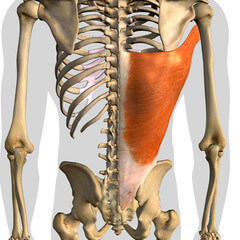 From Adobe Stock
The lats are the primary movers when it comes to performing a pull up. For most people, this the is main focus of strengthening when we are looking to improve pull up capacity.
BICEPS (Biceps Brachii)
The biceps brachii is a large muscle on the front part of the arm, and the muscle we can visualize when asked to “flex”. There are two heads to the biceps, the short head and the long head. Both heads attach on to our scapula (shoulder blade), helping to stabilize and mobilize it. The main action of the biceps is to flex the elbow, however the biceps is also involved with shoulder flexion (raising our arm up).
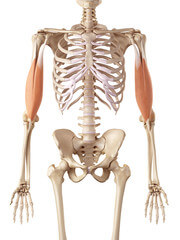 From Adobe Stock
With regard to pull ups, the biceps is a major mover for general pulling strength. When hanging from a bar with the traditional, pronated pull up, the biceps becomes a dynamic stabilizer for the shoulder and helps to protect it from injury when properly engaged. During a chin up (supinated pull up), the biceps is the primary mover due to the position of the arms and requires maximal strength and engagement.
DELTOIDS AND RHOMBOIDS
The deltoid muscle group is comprised of three individual muscles – the anterior, middle, and posterior deltoid. This group acts as a shoulder “cap”, and work to rotate and stabilize the shoulder. They also work to help a person carry heavy loads, and prevent dislocation of the shoulder when hanging from the pull up bar.
The rhomboids are a square-shaped muscle group that is located between the spine and the medial border of the scapula. They also work for scapular control and stabilization. Below is an image of the rhomboids.
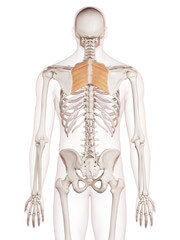 From Adobe Stock
CORE
Wait, aren’t pull ups an upper body pulling movement? How does the core come into play? The core, collectively, our ‘midsection’, contracts during a pull up to help translate energy and power into our upper body. We need to create tension in our lower body and core so that it is stable when we are pulling with our upper body.
Looking for some more core exercises? Read this article below!
READ: HOW TO TRAIN YOUR CORE!

DOES GRIP OR HAND ORIENTATION MATTER?
In the traditional pull up, the knuckles are typically faced outward (pronated grip), versus a chin up, in which the knuckles are faced inward (supinated grip). Different grip orientations for pulling motions 'turn on' different muscular groups as you are performing the movement. So, it depends on what you are trying to achieve! Research has shown that using rotating handles during pull ups or a pronated grip during a lat pull down exercise results in the greatest lat activation (1). Unsurprisingly, there was increased EMG activity in the biceps brachii and pectoralis with the supinated (chin up) grip. There was no demonstrated difference between varying grip WIDTHS on the bar for pull ups, chin ups, or lat pull downs in terms of lat activation. (1)
So again, it depends on what your goals are and what muscle groups you are trying to strengthen! As stated, both the lats AND the biceps are major movers when it comes to strengthening for strict pull ups, so it is recommended to have a varied training routine in order to maximize muscular gains for overall pulling strength.
How To Improve Scapula Control
Podcast Episode On Pull Ups
If you are short on time to get through this blog, or are more of an auditory learner, no worries! Listen to our awesome podcast episode as Dillon dives into the pull up!

SO, WHAT EXERCISES DO WE DO TO IMPROVE PULL UPS?
Now that we know what muscles need to be trained to improve our pull ups, let’s get to work! Outlined here are some exercises that can be used to train toward getting your first pull up, or improve your capacity if you are already performing strict pull ups.
LATS
Exercise 01 of 12
Exercise demonstration
Lat Pulldowns With Correct Form

View exercise instructions
Exercise 02 of 12
Exercise demonstration
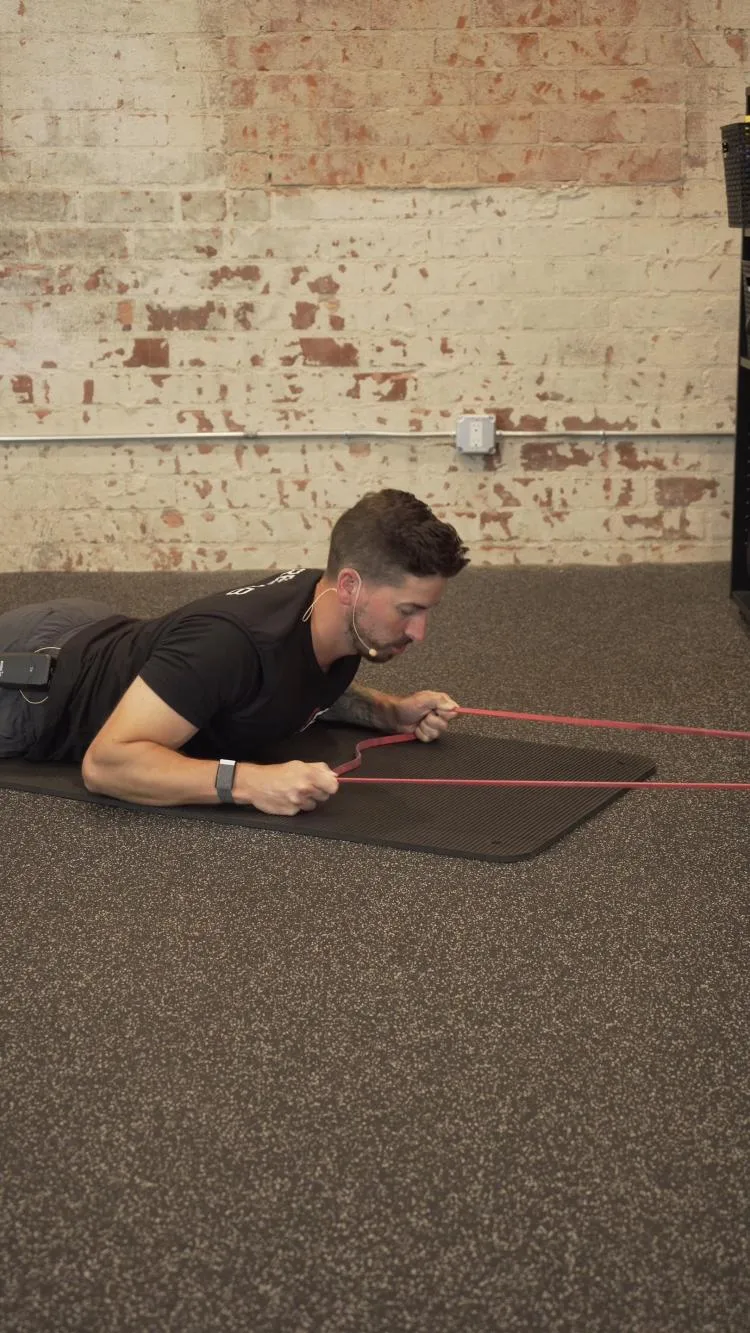
Prone Lat Pull Down - Band
View exercise instructions
- HOW: Anchor a band with two ends in a lower position close to the ground. Lay on your stomach in a prone position facing the band. Grab onto the band with each hand. Lift your chest and head up off of the ground while keeping your hips and legs stable on the ground. Bring both arms up in front of your off of the ground holding the band. Pull the band back with both arms for the prescribed amount of reps. .
- FEEL: You will feel your lat and shoulder muscles working.
- COMPENSATION: Don’t let your chest hit the ground, try to keep it up while pulling the band.
Exercise 03 of 12
Exercise demonstration
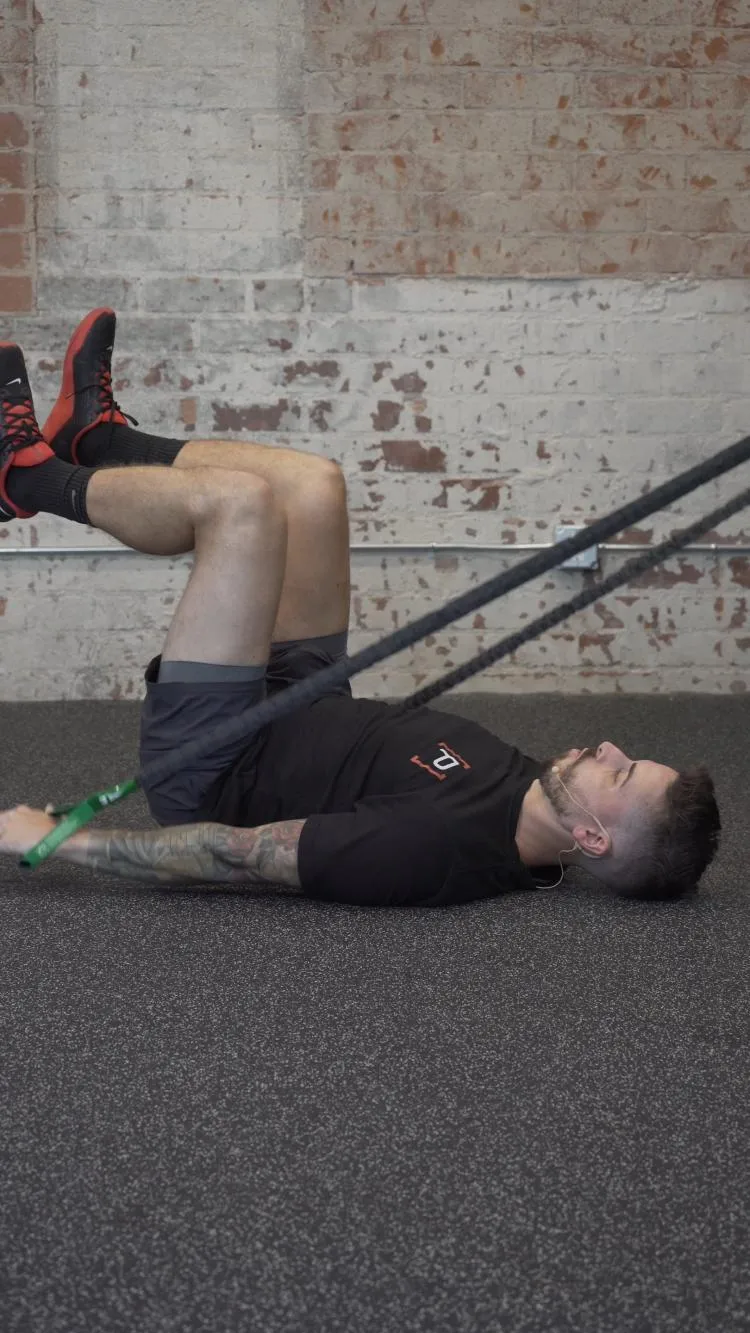
Table Top Lat Pull Over
View exercise instructions
BICEPS
Exercise 04 of 12
Exercise demonstration
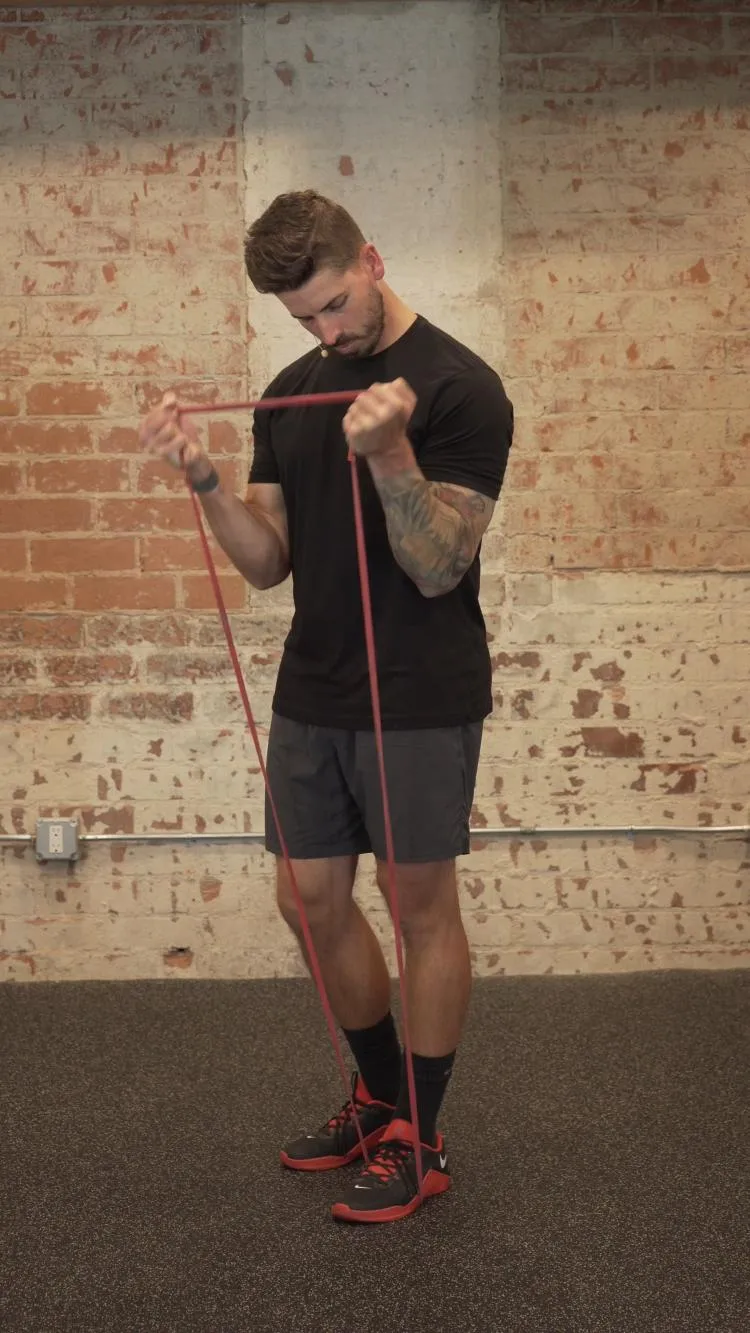
Bicep Curl - 3 Way, Band
View exercise instructions
- HOW: Loop a band underneath your feet and hold onto it with both hands in a standing position. The first curl, have your palms facing up with your elbows in while you curl the band up towards your shoulders. For the second curl, have your palms face each other. Then, the third curl have your palms facing down. Perform a full curl with each of these three for the prescribed amount of reps.
- FEEL: You will feel your biceps and forearm muscles working.
- COMPENSATION: Keep your shoulder blades back in a tall, upright position.
Exercise 05 of 12
Exercise demonstration
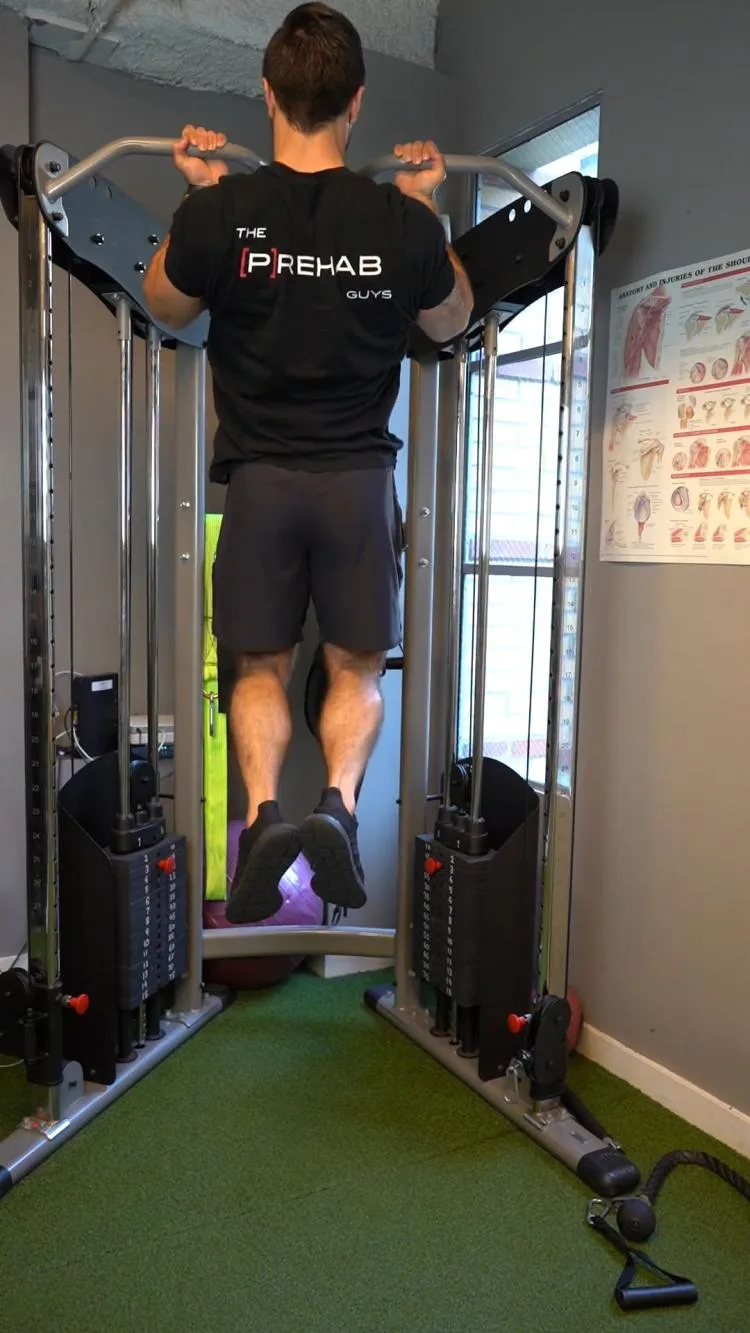
Chin Up
View exercise instructions
- HOW: Begin by holding onto a pull-up bar with your palms facing you. Then pull yourself up primarily pulling with the shoulder blades then moving at the shoulders and elbows. Slowly lower yourself back to starting position and repeat.
- FEEL: You will feel your back working with this exercise, primarily your lats and the muscles on the inside of your shoulder blades. You will also feel your bicep and forearm muscles assist you as you pull yourself up.
- COMPENSATION: Avoid arching the back as you lower yourself from the pull-up.
DELTOIDS AND RHOMBOIDS
Exercise 06 of 12
Exercise demonstration
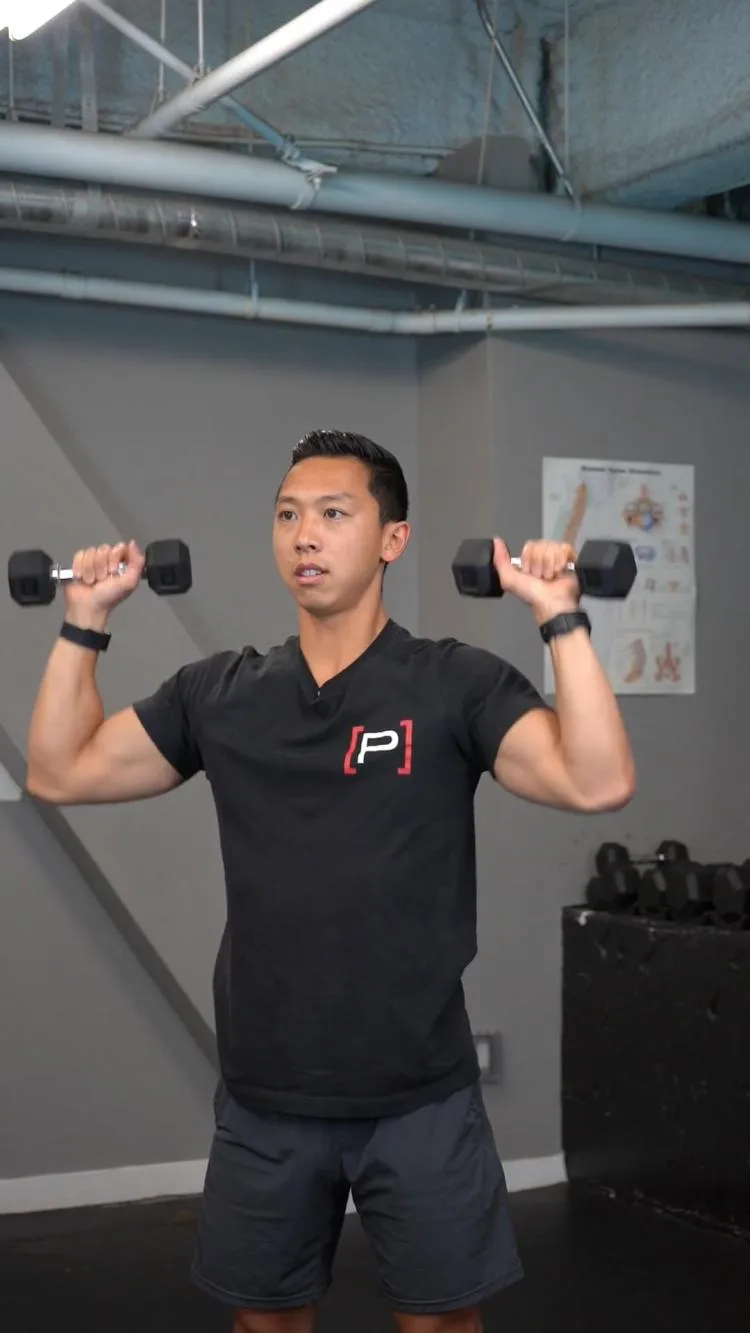
Deltoid Press - 3-Way
View exercise instructions
- HOW: Stand with a dumbbell in each hand. You will perform three different presses one right after the other. For the first one, bring your elbows in the front at shoulder height and palms facing in before you push the dumbbells straight up overhead. Next, same starting position as before, but now rotate your elbows out keeping an “L” shape with your elbows. After those, rotate your palms to face forward and press up overhead with your arms at your side. Perform each exercise 10 times each or as prescribed.
- FEEL: You should feel your shoulder muscles working.
- COMPENSATION: Don’t sway your body, stay upright.
Looking for more pushing exercises? Check this out!
Exercise 07 of 12
Exercise demonstration
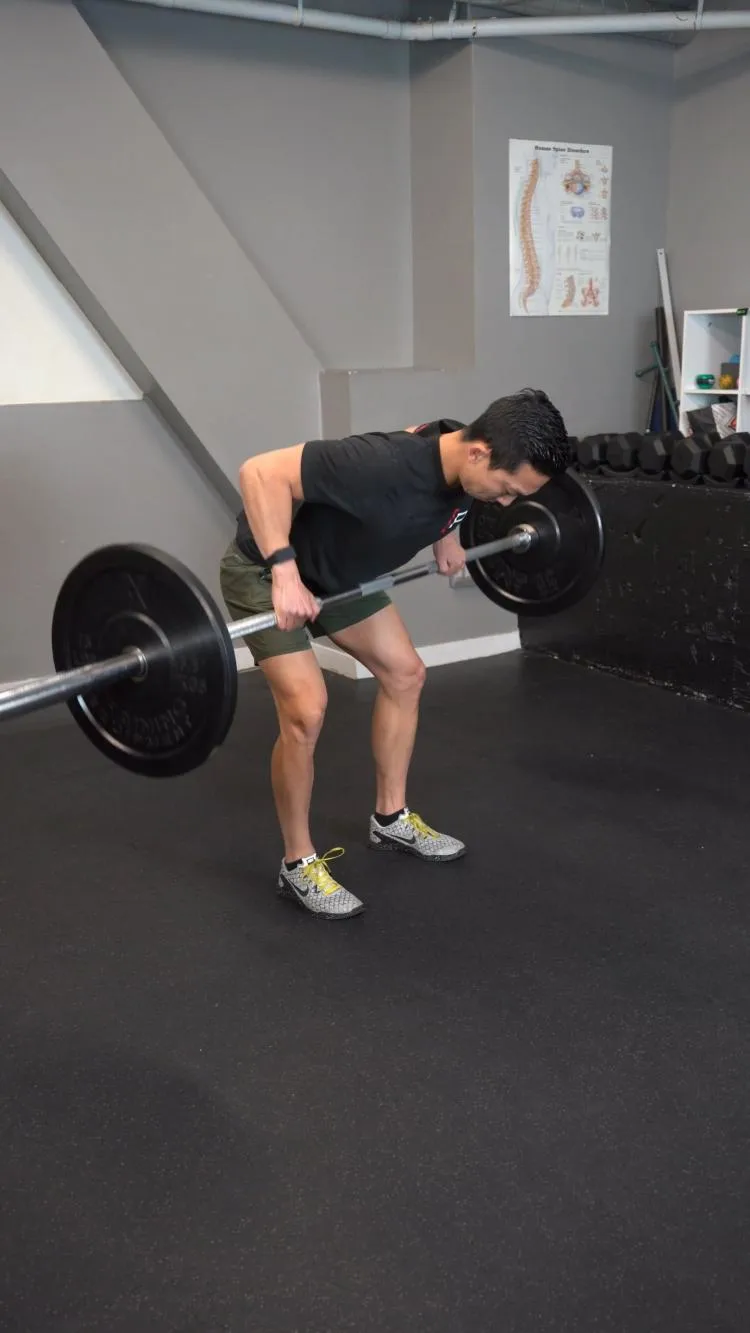
Bent Over Row - Barbell
View exercise instructions
- HOW: From a standing position lean your trunk to grab onto the barbell with both hands. While holding the hinge, perform a barbell row by driving your elbows back towards your back pockets and hands to your sides. Repeat.
- FEEL: This should feel like a back workout, specifically the muscles around and in between your shoulder blades, behind your shoulders, and even your biceps. Your glutes, hamstrings, and core muscles will be working as well to hold the hip hinge.
- COMPENSATION: Do not lose hip hinge position, do not excessively arch your low back. Try to stay still, only move your shoulder blades and shoulders.
Exercise 08 of 12
Exercise demonstration
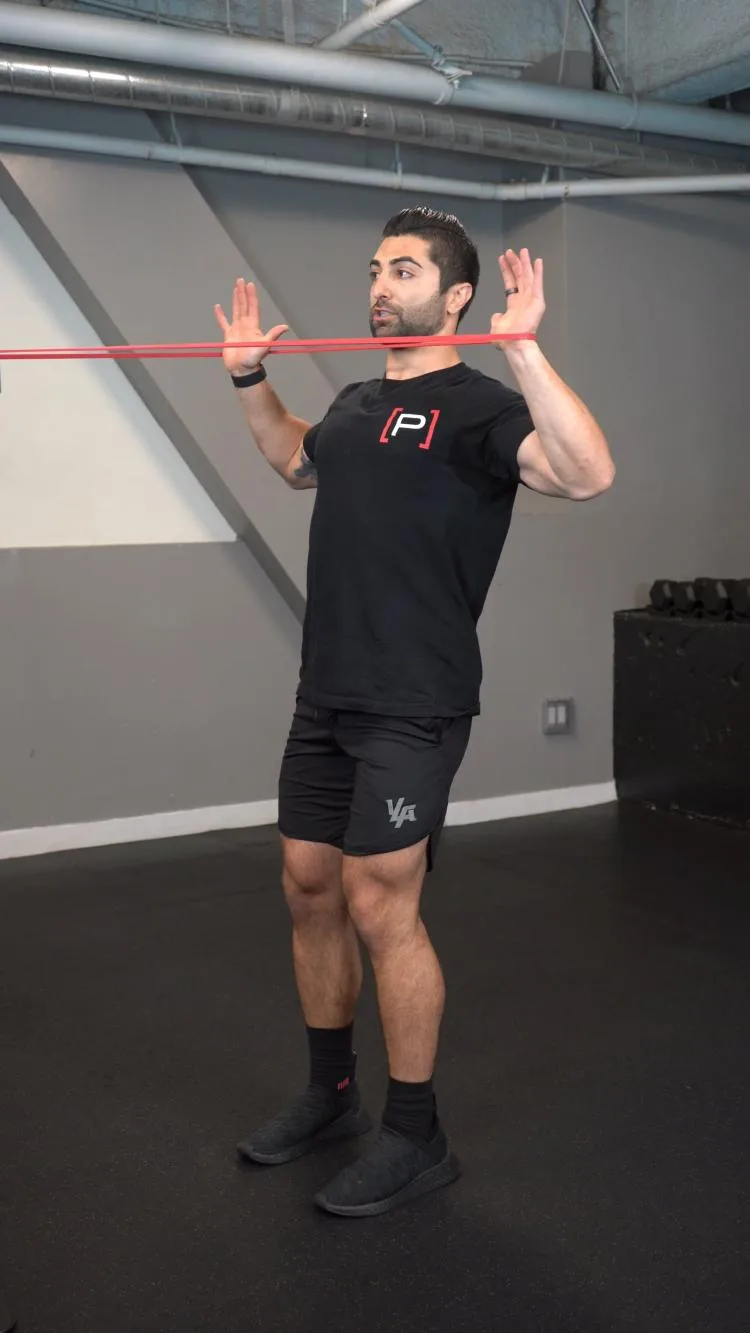
Face Pull - Band
View exercise instructions
- HOW: Begin this exercise upright with the resistance band anchored at about shoulder height. Place your wrists inside a band, then pull your hands back and out to the side. You want to pull with the shoulder blades and the back of the shoulder to achieve the end position.
- FEEL: You should feel the back of the shoulders working with this exercise.
- COMPENSATION: Avoid arching the back and shrugging the shoulders as you perform this exercise.
CORE
Exercise 09 of 12
Exercise demonstration
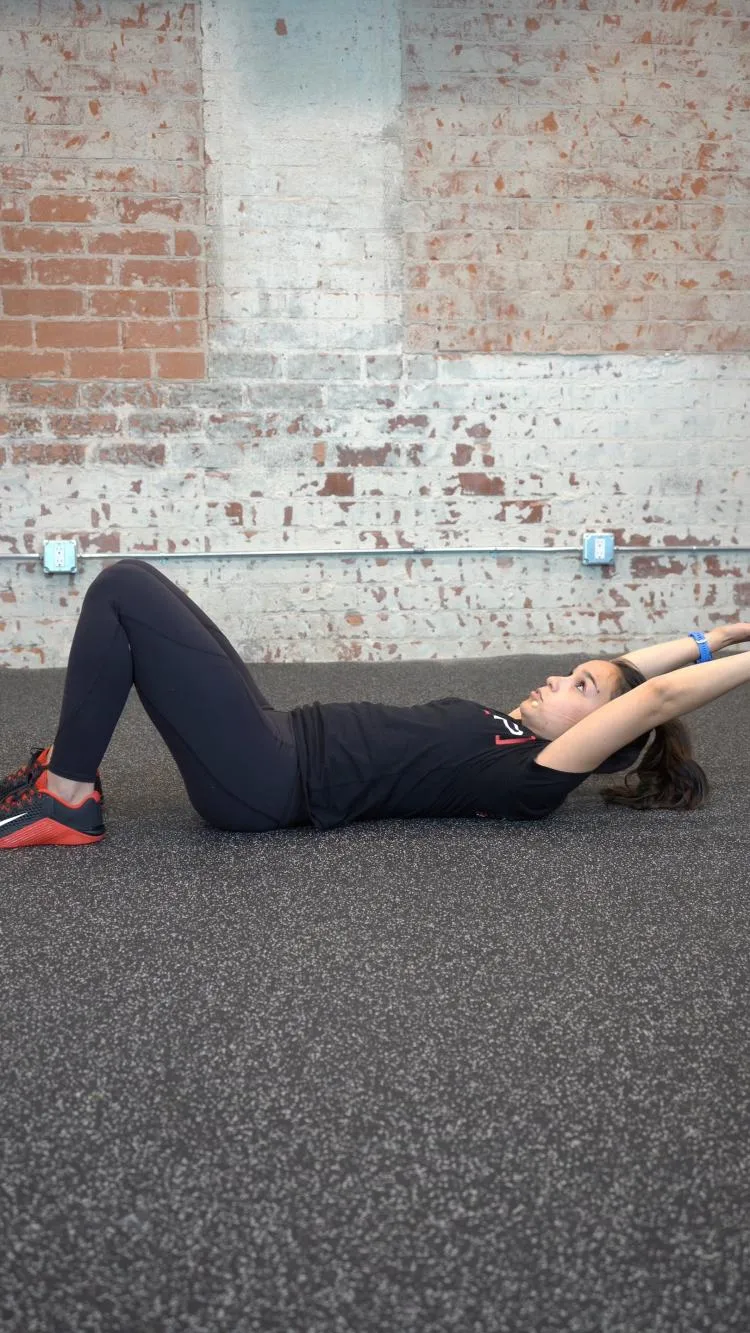
Hook Lying Hollow Hold
View exercise instructions
- HOW: Begin by lying on your back on the ground with your knees bent and feet flat on the ground or table. Engage your core by drawing your belly button towards your spine and tuck your chin. From here, straighten your arms and raise them up overhead as you keep your core tight and chin tucked.Hold that position for the prescribed time and repeat.
- FEEL: You should feel your core muscles working.
- COMPENSATION: Keep your back flat, don’t arch it and keep your gaze upwards and your chin comfortably tucked.
Exercise 10 of 12
Exercise demonstration
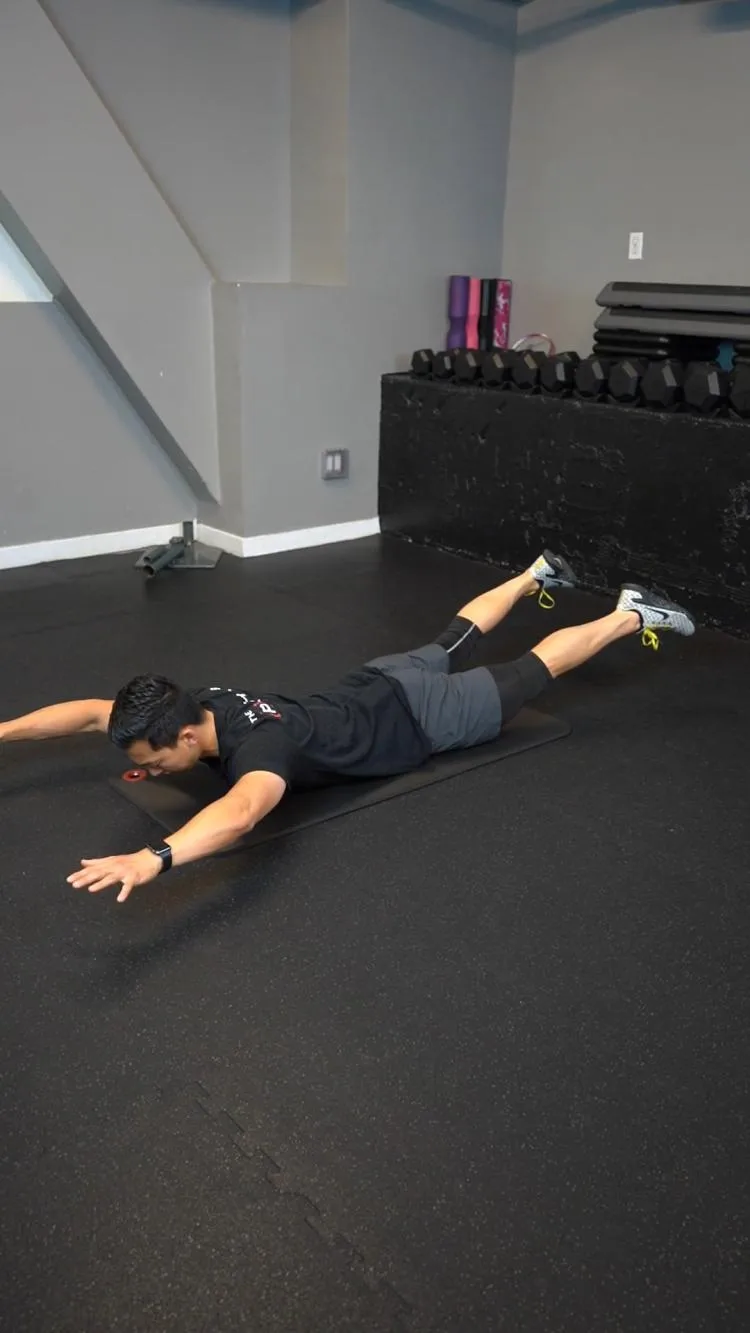
Prone Superman Hold
View exercise instructions
- HOW: Start by lying on your stomach on the floor. Using your back muscles, slowly lift your feet and hands away from the floor. The goal is to hover in a superman position for the prescribed amount of time. The more of your upper and lower body that is lifted away from the ground, the harder! Be cautious with this exercise as it may not be comfortable for everyone!
- FEEL: You should feel all the muscles in your lower back working to get into the superman position.
- COMPENSATION: Try not to super arch your back while doing this exercise. Only lift your chest/knees away from the ground enough to feel your lower back muscles working.
SPECIFIC VERTICAL PULL EXERCISES
Aside from building strength in individual muscular groups, it is important to train vertical pulling strength when training for pull ups. Research states that pulling vertically activates 80% of our max velocity and strength for the shoulders muscles and 50% of our max activation at the elbow. (2) That's a great way to get nice strong shoulders!
A pull up, by nature, is a vertical pull of a person’s body weight, so training in this position translates nicely to the stimulus we are trying to achieve, and should be included in a pull up training program.
*Note: Before hanging from a pull up bar, it is important to ensure that you are ready to do so safely.
Here are some vertical pulling exercises that will help you get that chin over the bar!
Exercise 11 of 12
Exercise demonstration
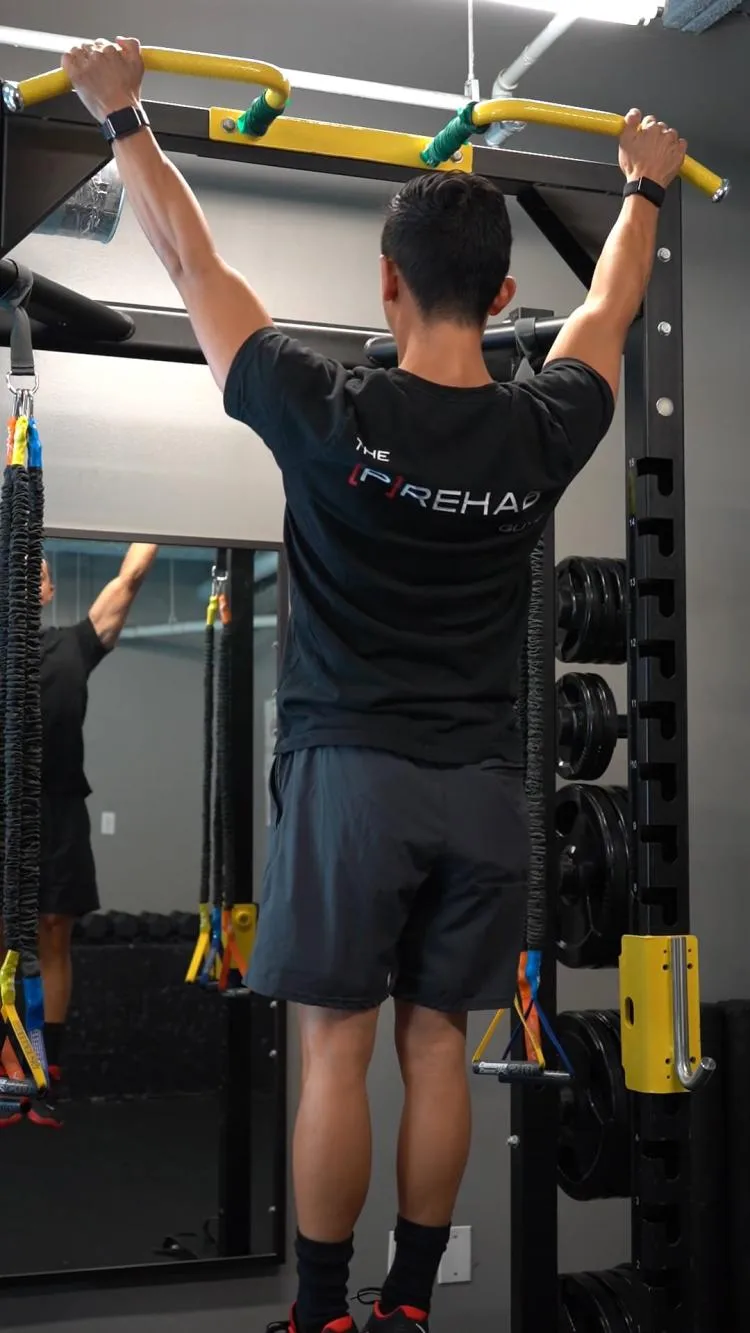
Scapular Pull Up
View exercise instructions
- HOW: Jump or step up to a pull up bar holding on with a fairly wide grip. While keeping your elbows straight, core engaged, and shoulder blades high, pull your body up just enough to where your shoulder blades rotate back down. Do this in a slow and controlled motion for the prescribed amount of reps.
- FEEL: You should feel your shoulder muscles working.
- COMPENSATION: Don’t bend your elbows or swing your body forwards or backwards.
Exercise 12 of 12
Exercise demonstration
Pull Up - Band Assist
Closing Thoughts
Whether you are looking to get your first strict pull up, or looking to build capacity to add more volume of strict pull-ups to your routine, it is important to build BOTH the individual muscle groups activated during the pull up motion as well as building overall vertical pulling strength. Having enough strength and stability around the shoulder is needed to safely hang from a pull up bar to prevent injury. And of course, practicing how we play (specifically drilling vertical pulling motions), will also for our skill transfer to the perfect pull up!
Learn How To Train For Longevity With Our Program
References
- Leslie, Kelly. L. M. BSc (Hons); Comfort, Paul MSc, CSCS*D The Effect of Grip Width and Hand Orientation on Muscle Activity During Pull-ups and the Lat Pull-down, Strength and Conditioning Journal: February 2013 - Volume 35 - Issue 1 - p 75-78 doi: 10.1519/SSC.0b013e318282120e
- Antinori, F & Felici, Francesco & Figura, F & Marchetti, M & Ricci, B. (1988). Joint moments and work in pull-ups. The Journal of sports medicine and physical fitness. 28. 132-7.
About The Author
Tayrn Everett, PT, DPT, CLT, CF-L1, CNC
Prehab Writer & Content Creator
 Taryn was born and raised in Maine and still resides there with her boyfriend and son. Taryn received her Doctorate in Physical Therapy from Husson University in 2010, and also carries a Bachelors in Kinesiology and Human Movement Science. She is a Certified Lymphedema Therapist, a Certified Crossfit Level 1 Trainer, and a NASM Certified Nutrition Coach. Taryn has 10+ years of experience in many different realms of PT, from the young athlete to the geriatric patient. Taryn considers herself a ‘lifelong learner’. She has special interests in oncology care and breast health, dry needling, and Crossfit training. In her free time, Taryn enjoys fitness, spending time with her family, continuing education, writing and reading, and is very excited to be a part of The Prehab team to educate and empower others to take control of their own health and wellness.