

On this page 4 sections
Your guide
What you'll learn
Have you ever noticed how much of the natural world revolves around the number seven? Think about it…seven continents, the Seven Wonders of the World. Did you know that there are seven colors in a rainbow? We may hear the term “lucky number 7” from time to time. There are seven days of the week, and a seven-layer dip is a crowd favorite, and a c-section cuts through seven layers of tissue! Coincidence? I think not.
In this blog, let’s chat through some safe exercises that can be completed post-caesarean delivery so this seven-layer abdominal surgery isn’t wearing on you seven days of the week.
Caesarean Delivery & Post-Operative Exercise
A caesarean delivery, often referred to as a c-section, is the most common surgery performed in the United States. It has been determined that over 1 million c-sections are performed annually (1). While the procedure is extremely common and very safe, it is considered to be a major abdominal surgery, and therefore, recovery and beyond may feel daunting.
As a pelvic floor physical therapist, I often have conversations post-c-section around scar tissue pain, return to cardio, lifting toddlers, weights, and everything in between. The truth is, caesarean deliveries are a big deal, but they don’t have to be intimidating or limiting at all!
As mentioned, this type of delivery involves an incision through the abdomen, including the skin, underlying fascia, and adipose tissue, in addition to the uterus (1). There are several medical reasons to warrant the need for a c-section delivery, with the most common being labor dystocia, meaning that labor fails to progress (1). When you consider the two lives involved, as well as the number of tissue layers that have to be navigated, it’s easy to see how a c-section delivery is considered to be a major abdominal procedure.
LEARN MORE ABOUT OUR POSTPARTUM REHAB PROGRAM
Our 8-week Postpartum Rehab program is designed to improve your confidence in your pelvic floor, hips, core, and provide you with the necessary education along the way! Please be sure that you have been cleared to begin activity by your OB-GYN prior to beginning our programming
So, how do we know what activities are safe to perform and encouraged after a c-section delivery? I’ll start by reiterating the importance of gentle movement after abdominal surgeries. Research continues to demonstrate that early mobilization post-abdominal procedure is extremely valuable for healing and overall patient well-being (2). Exact protocols are very dependent on the abdominal procedure itself, but most protocols encourage mobilization on post-operative day one or even the same day as the procedure (2).
READ: PELVIC FLOOR AND PHYSICAL THERAPY

These protocols allow for blood flow, initiating proper bowel and bladder habits, and proper use of the cardiovascular system, which all enable a healthy healing process. While your medical team will be able to best advise you in early post-operative mobilization, it’s reassuring to know that very light activity is safe and even encouraged!

Now, you’re probably wondering how you make the jump from having assistance in the hospital to get up and go for a walk around the hall to deadlifting at your local CrossFit gym. This is certainly achievable, but, like all things in life, the path is not expected to be linear! So, where do we begin? Take a look at the exercises below.
Exercises to Perform Post C-Section Delivery
A great place to start post-c-section delivery is intentional exercise to get your diaphragm, your pelvic floor, and your core to work together. For more information, read this blog on Diastasis Recti Abdominis. In short, these muscles are all meant to work in unison, and as you can imagine, both pregnancy and labor and delivery can put a lot of strain and stress on this tissue!
READ: LOW BACK PAIN AND THE PELVIC FLOOR: THE SURPRISING CONNECTION

What we do know as pelvic floor physical therapists is that safely exercising the core muscles after pregnancy can assist in reducing long-term weakness and dysfunction of the tissue. The keyword here is “core”, and intentionally reintroducing exercises that strengthen the core after the natural occurrence of diastasis recti abdominis during pregnancy and the incision through the core muscles during a c-section delivery is important.
There are many safe exercises to begin to target your core muscles after c-section delivery, but one simple exercise is a posterior pelvic tilt as demonstrated in the first exercise below. A recent study determined that a posterior pelvic tilt activated the rectus abdominis muscle in a group of women who had a c-section delivery and a group of women who had a natural birth to a greater extent than abdominal bracing alone (3).
Give these exercises a try!
Exercise 01 of 04
Exercise demonstration
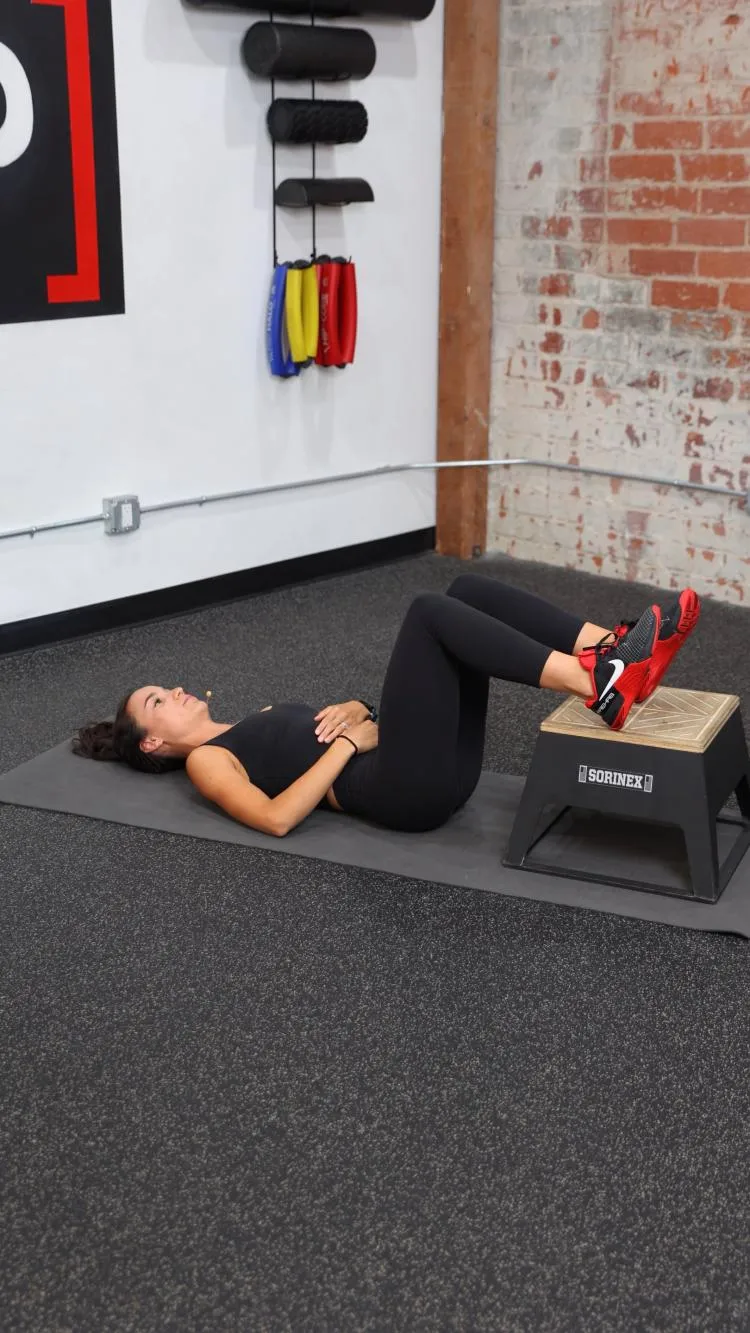
Supine 90-90 3D Breathing
View exercise instructions
- HOW: Begin by lying on your back. Find a bench, ottoman, chair, or couch to rest the feet on. The hips and knees are at a 90 degree angle. Take a big belly breath in to relax the pelvic floor. Breathe out to initiate a pelvic floor contraction, so squeezing and lifting the area between the sit bones. Dig the heels slightly down into the surface you are resting your feet on.
- FEEL: You will feel your hamstrings and core engaged.
- COMPENSATION: Keep the back flat to the ground.
Exercise 02 of 04
Exercise demonstration
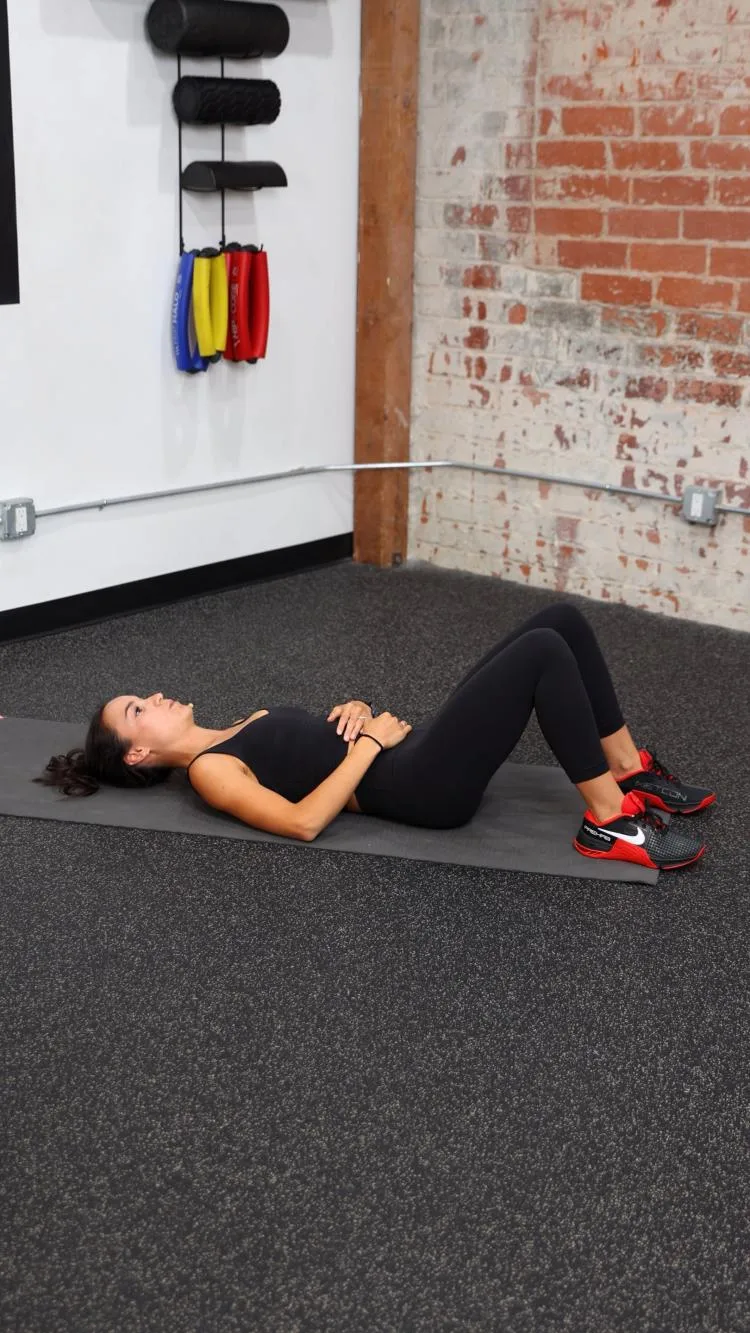
Supine Pelvic Floor Contraction
View exercise instructions
- HOW: Begin by lying on your back with your knees bent, feet resting on the ground. Place both hands on the belly. Breathe in, and as you breathe in, relax your pelvic floor. This is the area between the sit bones. As you breathe out, engage the pelvic floor. Squeeze and lift the area between the sit bones.
- FEEL: You should feel the area between the sits bones engaging.
- COMPENSATION: Avoid flaring the ribs up.
Exercise 03 of 04
Exercise demonstration
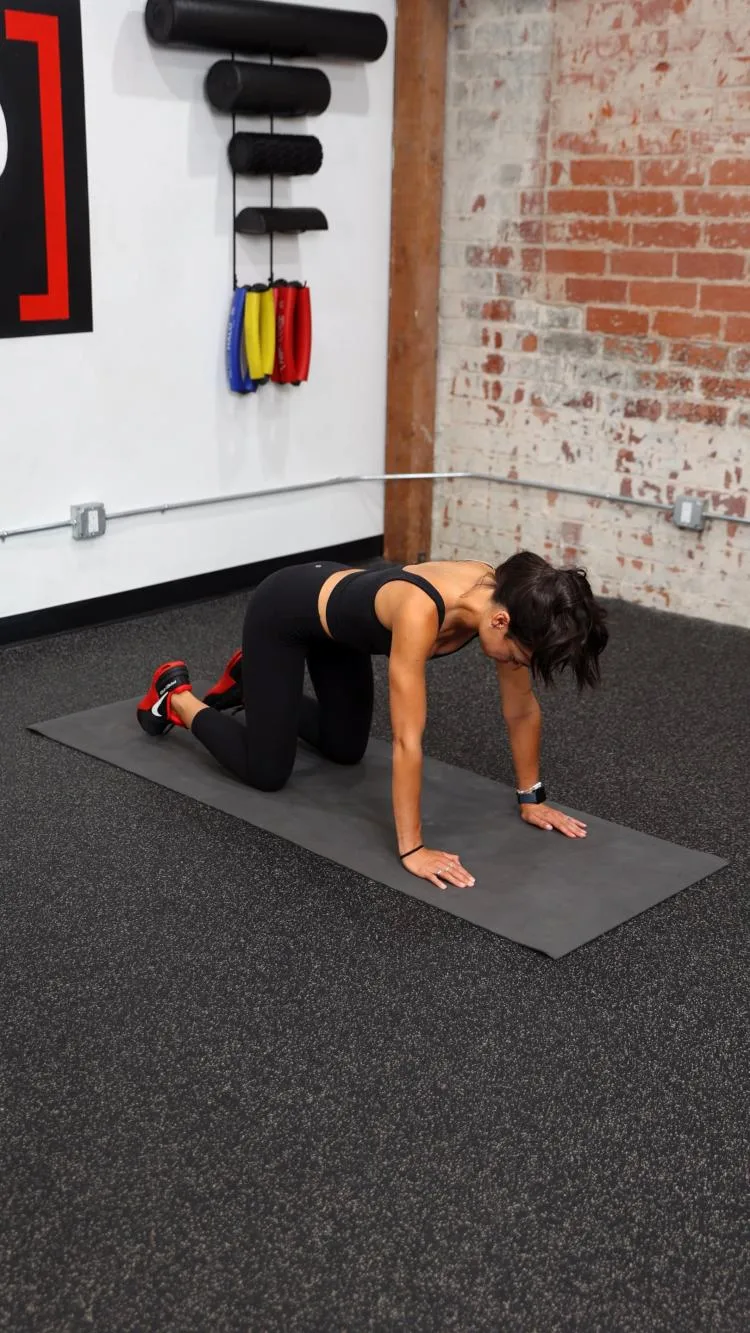
Quadruped Hold - Pelvic Floor Contraction
View exercise instructions
- HOW: Begin by positioning onto the hands and knees. Bring the ribs down to the pelvis, making the back flat. As you breathe in, drop the belly towards the floor. Fill the belly with air lengthening, flexing, and softening the area between the sits bones. As you breathe out, keep the ribs down toward the pelvis squeezing and lifting the pelvic floor.
- FEEL: You will feel your belly expanding on the inhale and your core contracting on the exhale.
- COMPENSATION:Avoid arching the back. Avoid twisting through the trunk.
Exercise 04 of 04
Exercise demonstration
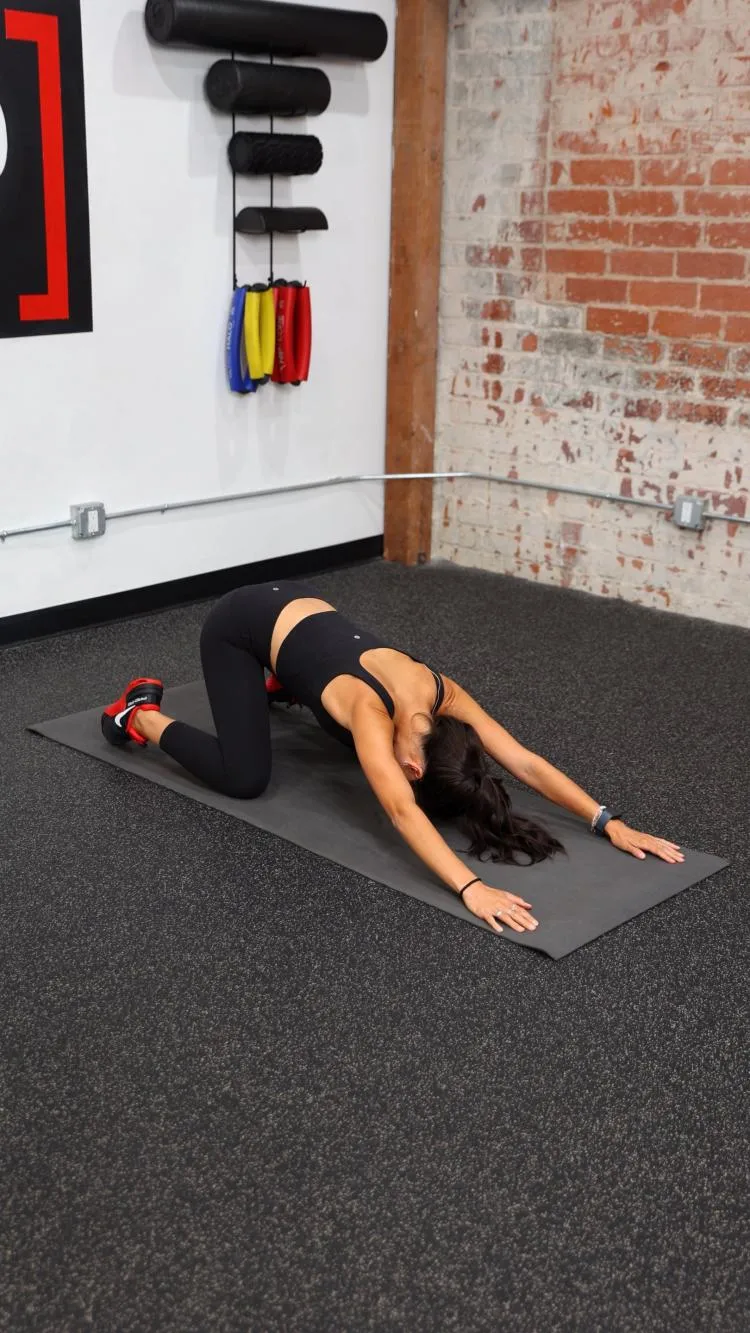
Child's Pose - Pelvic Floor Relaxation
View exercise instructions
- HOW: Begin in a child’s pose position with a pillow or blanket rolled up underneath the hips. The knees should be wider than the hips. Also an option to rotate the hips inward, bringing the ankles out. You can also have your head supported on your hands or with arms out in front. As you breathe in, breathe into the belly and the area between the sits bones, letting the pelvic floor relax. Breathe out maintaining pelvic floor relaxation in this position.
- FEEL: You will feel your core working.
- COMPENSATION: Avoiding holding your breath.
Closing Thoughts
A c-section delivery is considered to be a major abdominal surgery while also being the most common surgery in the United States (1). Despite its commonality, the understanding of safe and intentional exercise after a c-section delivery can feel a bit unclear. We do know that early mobilization after an abdominal surgery is standard of care, but the bridge between being in the hospital one day after c-section delivery and preparing to lift your toddler at home can feel daunting.
Exercises that intentionally load the core, the pelvic floor, and the diaphragm are an excellent place to start. Working with a pelvic floor PT who has specialized education in the management of c-section delivery and postpartum care is a great place to start. And, as always, get cleared from your doctor prior to beginning any intense exercise postpartum.
With seven layers of tissue involved in a c-section delivery, it’s important to validate the need for strengthening exercises during the postpartum period. So, give the exercises above a try so you can tackle making that seven layer dip, seven days of the week, while planning a trip to one of the seven wonders of the world.
LEARN MORE ABOUT OUR POSTPARTUM REHAB PROGRAM
References
About The Author
Lyndsay Centrowitz, PT, DPT
Prehab Writer & Content Creator

Dr. Lyndsay Centrowitz graduated from Colorado State University with a BS in Health and Exercise Science and a concentration in Sports Medicine. After multiple personal sports-related injuries and discovering a passion for healing through movement, Lyndsay attended Creighton University to receive her Doctorate of Physical Therapy. An avid runner herself, she has a particular interest in working with high school, recreational, and elite endurance athletes and has undergone specialty training in pelvic floor rehabilitation, postpartum care, and management of the female athlete to better serve her clientele. Through this specialty training, she has acquired a Certificate of Achievement in Pelvic Health Physical Therapy through the American Physical Therapy Association. Lyndsay now owns her own practice, StrongHER, where she specializes in female athletics and care of pregnant and postpartum individuals. Additionally, Lyndsay is BSPTS C2 certified in scoliosis specific exercises and has found a niche working with adolescents with scoliosis to improve overall spinal health. No, you’re not seeing double! Lyndsay is an identical twin to Lauren Lynass, one of our Prehab rockstars. A native of Colorado, Lyndsay is an adventure seeker who loves to hike, camp, and race her twin sister on the mountain trails. When she isn't exploring Chicago with her son and husband, you can find her curled up with a cup of tea and a good book. Follow along @strongher_dpt on Instagram!