

On this page 8 sections
Your guide
What you'll learn
Sitting for too long has been shown to have a negative impact on your body. With sedentary behavior, changes are seen in insulin sensitivity, and cardiovascular and metabolic function, along with the increased risk of mortality. This includes high blood sugar, elevated blood pressure, and increased body fat and cholesterol levels. Research suggests that on average, adults sit for approximately 60% of their waking day, which is more than 7 hours!1 It is our job to help you take ownership of your body, and not allow environmental factors to dictate your movement capacity. Follow along in this article to learn some awesome desk job exercises you can easily replicate with just yourself and about 3-5 feet of space.
Sedentary Behavior Leads To Lack Of Movement
Sedentary behaviors, like sitting, reduce your energy expenditure compared to standing or moving. Sitting can lead to cardiovascular problems by directly impacting the body’s ability to properly deposit fats in the bloodstream. Additionally, healthy cholesterol, known as HDL, may also be impaired with prolonged periods of sitting.2 HDL’s function is to keep arteries clear of plaque. When HDL’s function is disrupted, plaque starts to build up in blood vessels, and can further increase one’s risk for cardiovascular dysfunction. This can all be combated with just a few easy steps that we want to share with you, so read on!
Want To Stay Fit But Don't Have Access To A Gym?
Ailments Related To Desk Jobs
Other common ailments of individuals who work at a desk include musculoskeletal issues such as neck, back and shoulder pain. In addition to physical pains, sitting can negatively impact your mood and ability to handle stress. One study by Coulson et al. looked at exercising and performance in the workplace. They found that on days when workers exercised, they had higher scores on performance indicators as well as self-reported improvements in mood.
So, is it possible and if so, how hard does one have to work to undo all of the negative effects of sitting?! Ecklund et al. performed a meta-analysis to answer just that.4 They looked at 16 studies and data from over one million adult men and women. In this study, the researchers categorized walking at 3.5 miles per hour or biking at 10 miles per hour as “moderate intensity” exercise levels. They concluded that between 60-75 minutes of exercise equivalent to moderate intensity on a daily basis was enough to counteract the effects of 8 hours of daily sitting. The study also found that individuals who did not participate in any form of physical activity, regardless of their daily sitting time, had the highest risk of early death. That risk, the study concluded, was equivalent to the risk associated with obesity and smoking. The sedentary individuals in the study were 28-59% more likely to die early than individuals who were most active.
Therefore, no physical activity at all poses a greater risk to one’s health than extended periods of sedentary behavior, such as sitting.

Keep It Simple - Just Move!
The good news is that there are easy ways to start counteracting the effects of sitting! Try out the following tips to incorporate more movement into your daily routine, break up your sitting time, and recharge your brain and body!
- Alternate between sitting and standing while working: This is most easily done if you have a desk that can be raised and lowered to accommodate your work station set up at both heights. However, if you don’t have an adjustable desk, you can improvise by using a high table or counter. Another strategy is to stand while talking on the phone or even walking with your work colleagues for meetings.
- Some individuals have taken the standing desk idea a step further and have started utilizing a treadmill desk! Companies have started making specialized treadmill desks, but you can also simply position your workstation on a stand above a regular treadmill to be able to walk and work throughout the day.
- Take a break every 30 minutes and try these stretches to address both your upper body and lower body muscles that commonly get tight with desk job work. Pick 2 or 3 stretches to perform every 30 minutes. Try to hold each stretch for at least 30 seconds at a time. Ways that you can remember to take a break is putting a note on your desk or using your phone/computer to set a reminder.
Improve Your Postural Pain
Exercise 01 of 07
Exercise demonstration
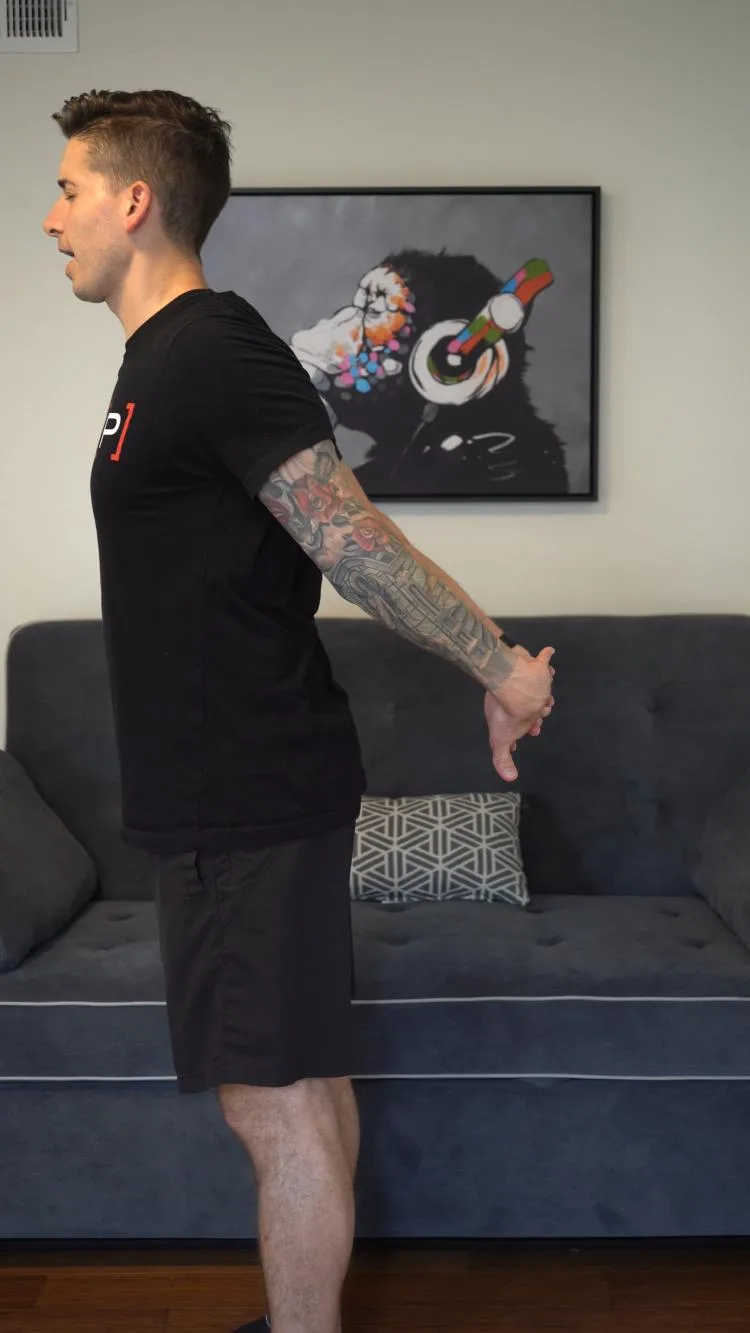
Pec and Bicep Stretch
View exercise instructions
- HOW: Start in a standing position. Perform the stretch by interlocking your hands and fingers behind your back. While keeping your chest up, squeeze your shoulder blades back, straighten your arms, and rotate your palms up towards the sky. Reach back and stretch as far as you feel comfortable with.
- FEEL: You should feel a stretch in your pecs, biceps, and forearms. You should feel like your shoulder blades are pinching together.
- COMPENSATION: Keep your chest up, keep your hands and fingers interlocked together. Try to lift your hands up as high as you feel comfortable with.
Sample [P]rehab At Home Program
Sitting position often leads to rounded shoulders and tightness throughout our arms. This pec and arm stretch is a great way to open up the front of your chest wall!
Exercise 02 of 07
Exercise demonstration
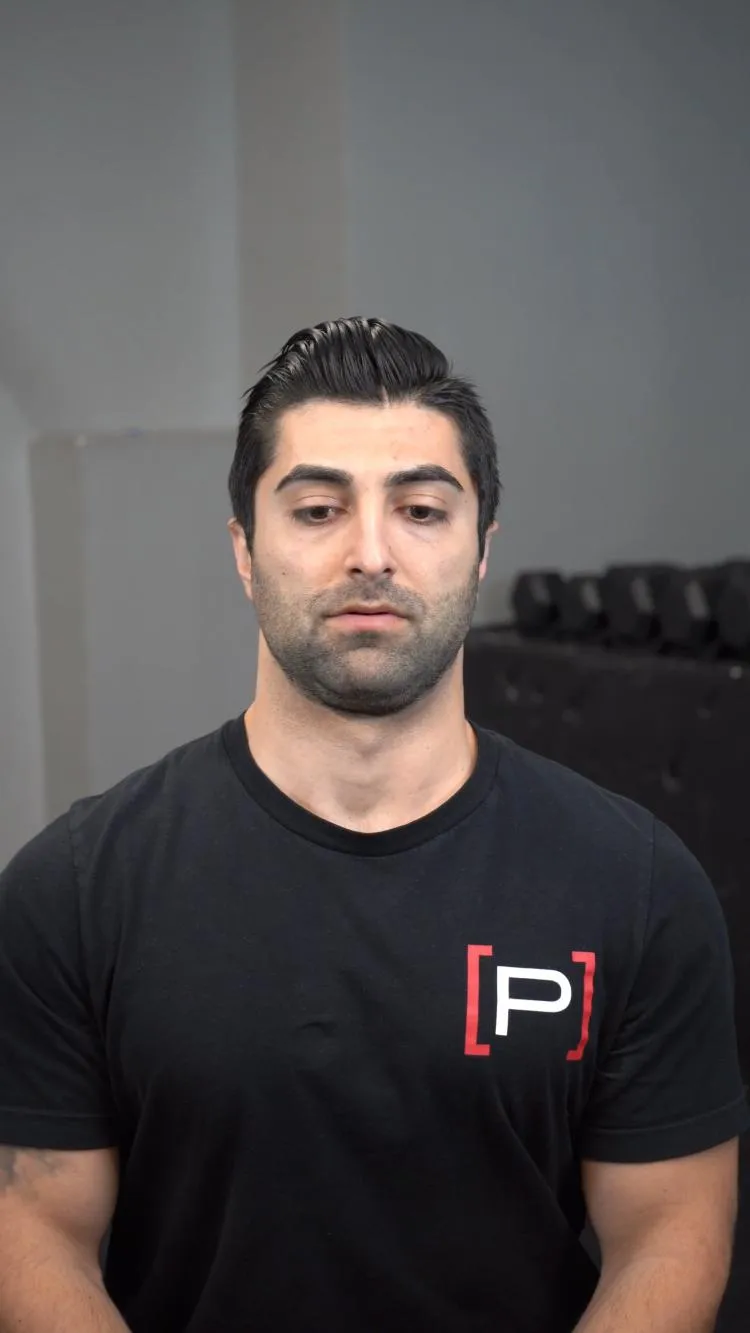
Seated Chin Tuck
View exercise instructions
- HOW: In a seated position focus on tucking your chin towards the front of the upper part of your neck. Think about creating a "double chin".
- FEEL: You will feel the muscles in the front of your neck activating. You may feel a stretch in the back of the neck at the base of your skull.
- COMPENSATION: Try minimizing excessive neck motion, realize this is a smaller motion focused on moving the skull on the cervical spine. There will be some cervical motion, but not excessive motion. For instance do not let your entire neck bend forward (chin to chest).
There is a correlation between poor posture, sedentary habits, and neck pain. The chin tuck exercise is a great way to work on improving your neck strength!
Exercise 03 of 07
Exercise demonstration
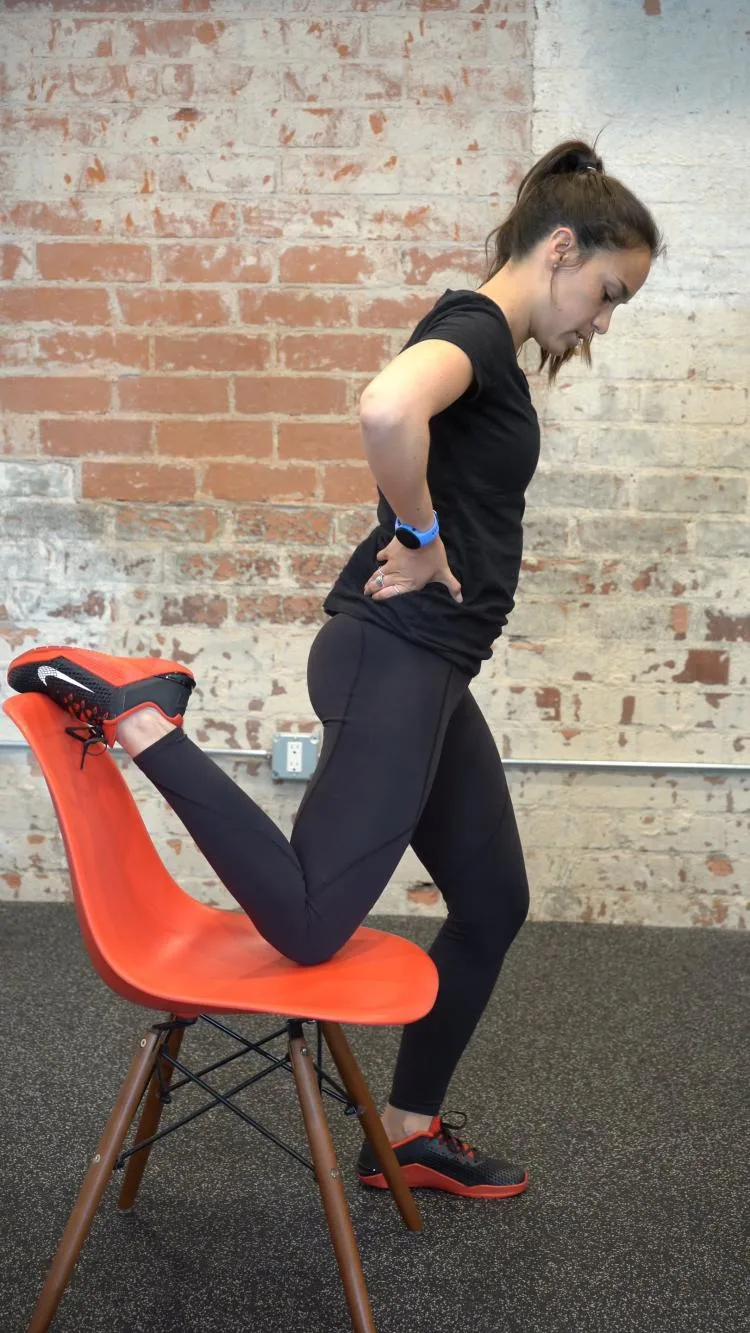
Standing Hip Flexor Stretch - Chair
View exercise instructions
- HOW: Begin in a standing position with a knee bent on the chair with your foot leaning on top of the chair, safely! Keep your hips tucked and core engaged as you begin to bend the knee you are standing while you shift your body forwards to feel a stretch in your bent leg’s hip. Hold that stretch for as long as prescribed.
- FEEL: You should feel a stretch in your hip flexor of the knee bent up on the chair.
- COMPENSATION: Don’t slouch your back forwards, stay straight up.
The front of our hips often becomes tight when we sit for long periods of time. This is a great way to open up your hips right at your desk chair!
We Need To Do More Than Just Stretch!
Stretching has its time and place, but our body needs activation of our muscles to make that mobility stick! In addition to stretching, try these exercises during your breaks to strengthen up your muscles that may be weaker from sitting. What’s great about these is that they don’t require any gym equipment, so you can do them at work!
Also, be sure to check out our podcast if you want to learn more about the concept of stretching.

Strengthening Exercises For Desk Job Workers
Exercise 04 of 07
Exercise demonstration
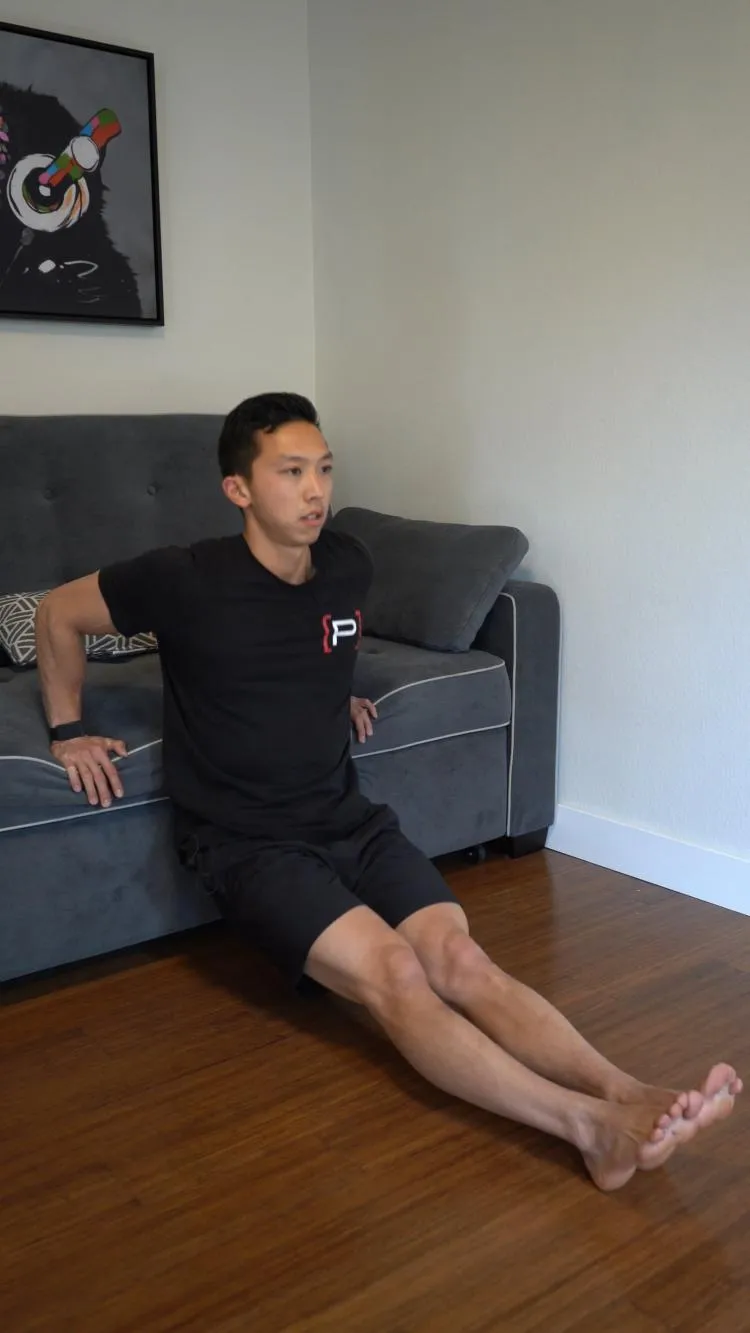
Dip
View exercise instructions
- HOW: Start with your hands supported on an elevated surface like a couch or bench behind you at your sides. With your hips unsupported in the air, but your feet supported on the ground, lower your hips down towards the ground by letting your elbows bend and shoulders shrug. Lower down as far as you feel comfortable with, then press through your hands to straighten your elbows and return to starting position. Repeat
- FEEL: This should feel like an upper body workout, specifically your triceps, shoulders, and shoulder blades. The closer your feet are to you, the easier the exercise is.
- COMPENSATION: Try to keep your upper torso still in terms of not leaning back or forward excessively. Move slow and controlled, think time under tension is better here than speed. Be mindful of your elbow flare, try to keep your elbows tucked back as long as it feels comfortable for you.
The dip is a great way to strengthen your chest and arms. Keeping your elbows tucked in close to your sides will decrease the stress through your shoulders with this exercise.
Exercise 05 of 07
Exercise demonstration
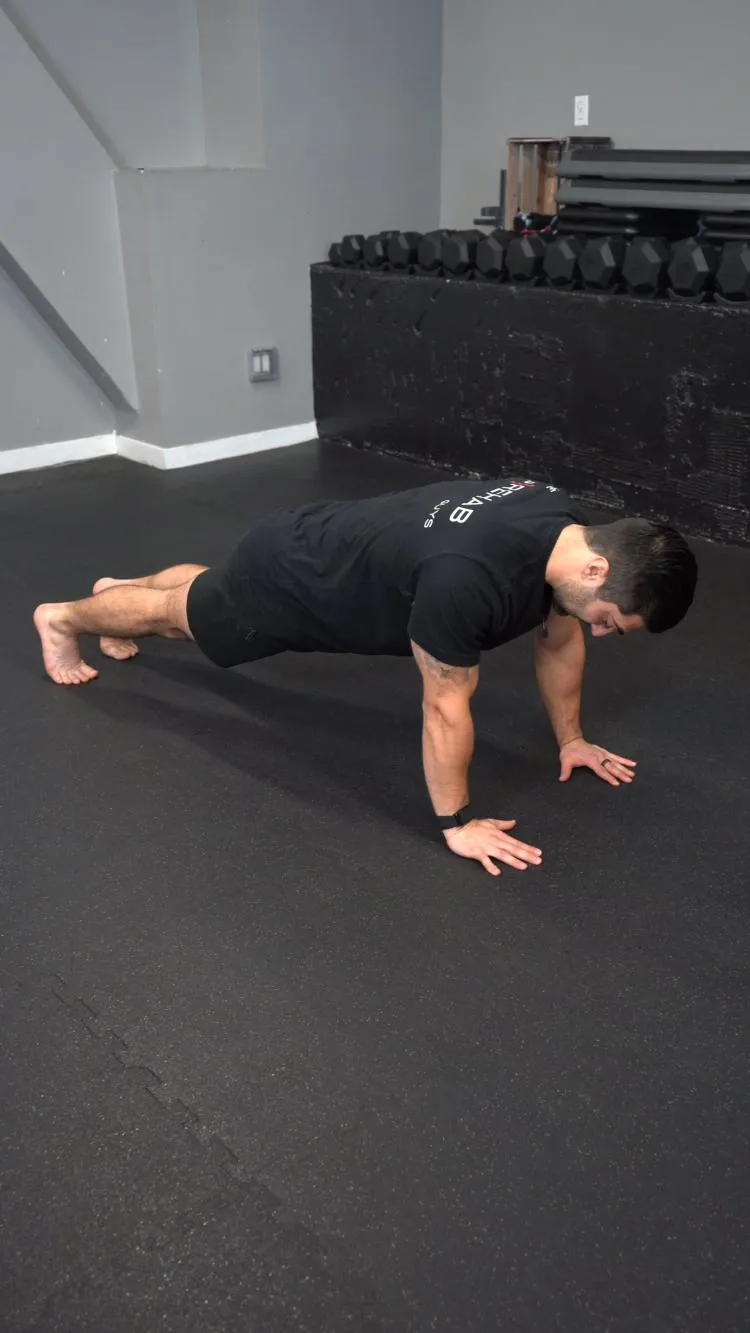
Push Up - Basic
View exercise instructions
- HOW: Start on your hands and your feet, have your hands positioned under your shoulders. To begin the exercise, assume a high plank position, while keeping your body straight lower your chest down towards the ground as far as you can, push up to the starting position and repeat.
- FEEL: This should feel like an upper body workout, your shoulders, chest, and triceps. You should also feel your core and your glutes/quads working to maintain a straight body from your heels to the back of your head.
- COMPENSATION: Keep your body in a straight line, don't hike your hips high in the air or let your butt sag to the ground. Stay evenly balanced through both arms as you lower down and push up.
You can modify this by doing desk push ups if the standard push up is too challenging to start. Pick a variation that you can complete at least 3 repetitions at a time. Try to get up to 30 push ups a day!
Get Your Heart Pumping!
The following exercises can be performed as a cardiovascular routine. Perform 2 rounds of 30 seconds of each movement, trying to complete as many repetitions as possible.
Exercise 06 of 07
Exercise demonstration
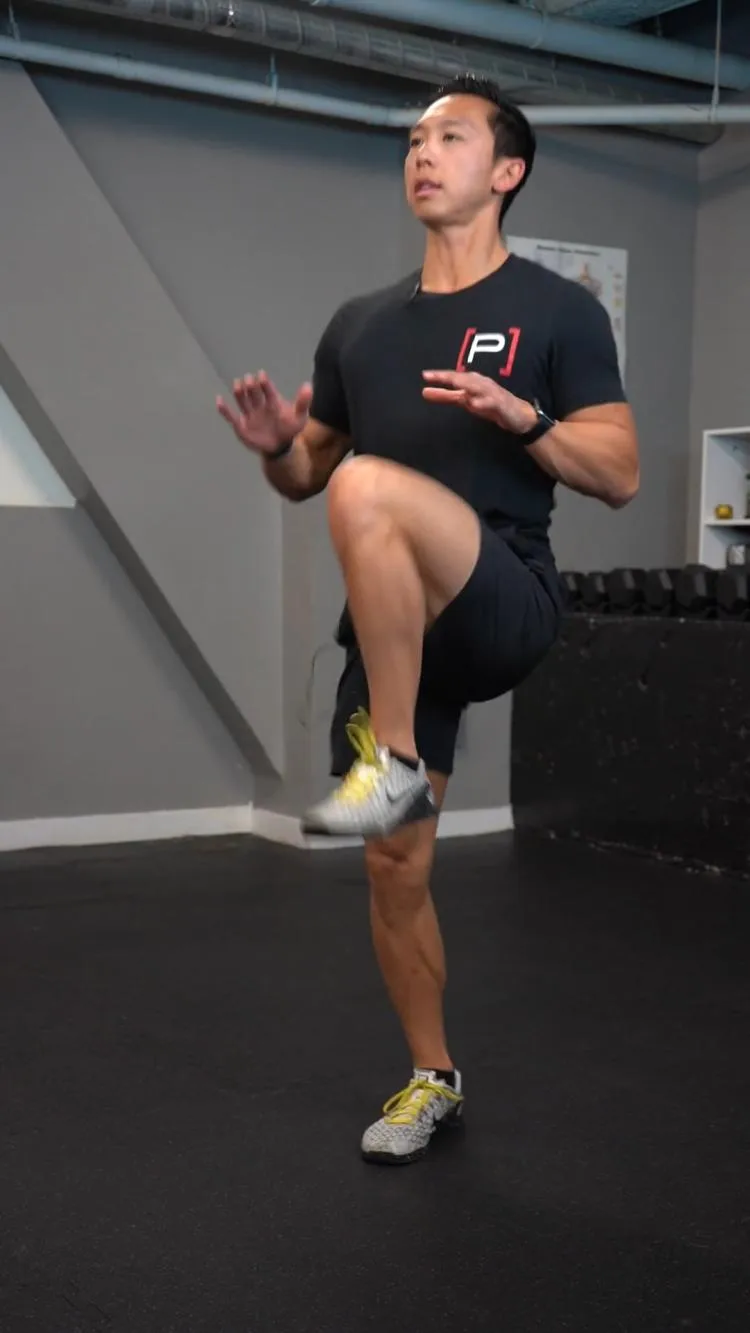
High Knees - In Place
View exercise instructions
- HOW: In a standing position, start by bringing one knee up as high as you can tolerate(hip level is as high as you need to go). Push off with your toes on the opposite leg to drive the other knee up. Alternate pushing off with each foot and bringing each knee up as quick and controlled as your can.
- FEEL: You should feel the muscles in your hips, thigh, and calves working.
- COMPENSATION: Stay straight up. Engage your core to keep your back straight, don’t slouch forward or lean back. Stay in the same place while alternating to each leg, don’t move forward.
Exercise 07 of 07
Exercise demonstration
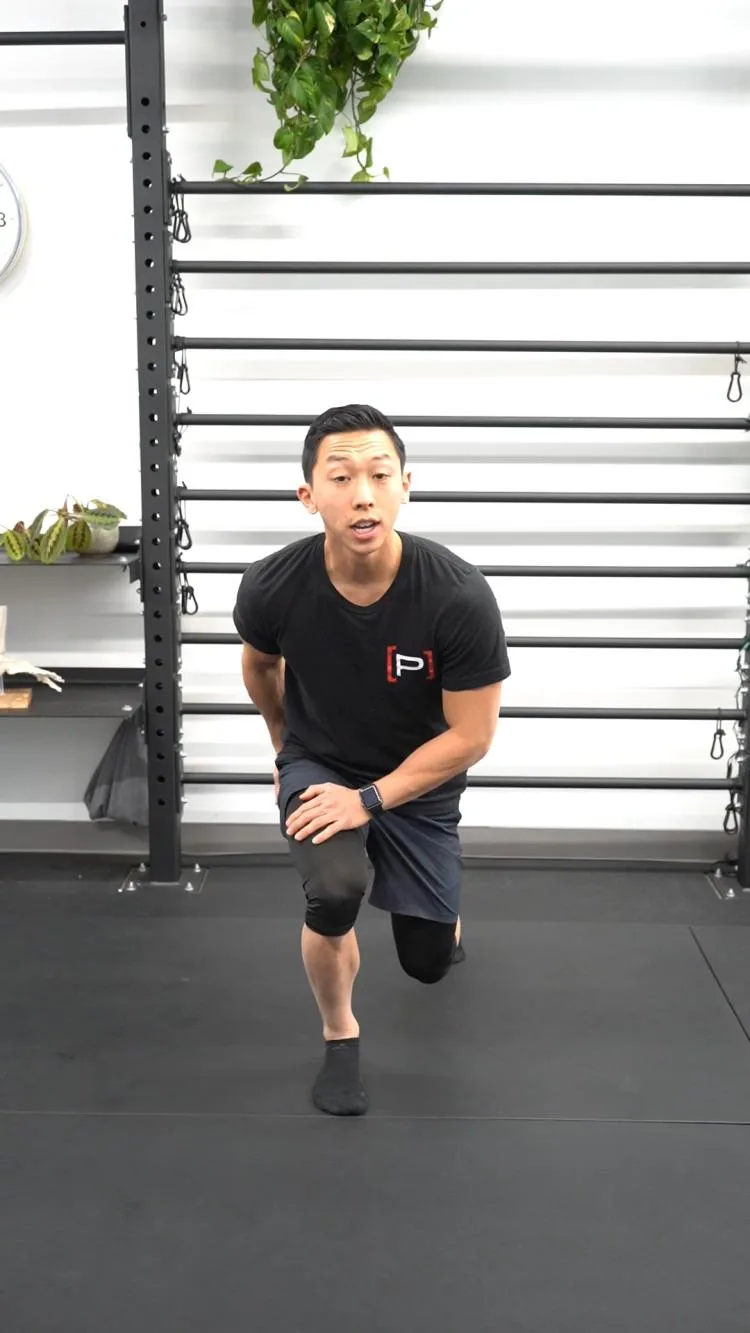
Anterior Lunge
View exercise instructions
- HOW: Start with your feet hip-width apart. Step forward with one of your feet and slowly descend into a lunge position. Push yourself back to your starting position, repeat
- FEEL: You should feel your front leg, primarily in your quadriceps and glutes, doing most of the work
- COMPENSATION: Don’t let your knee cave-in or bow out, try to make the leg that is stepping doing most of the work. The back leg is just for balance.
Closing Thoughts
Start with these exercises to get your blood pumping, reduce stiffness and aches and recharge your mind! Ask a coworker to join you to help you stay on track and to add some fun to your routine. You will notice that simple and even leisurely movement can have positive impacts on your physical and mental well-being. The more you move, the better you will feel.
Want To Stay Fit But Don't Have Access To A Gym?
References
- Matthews CE, Chen KY, Freedson PS, Buchowski MS, Beech BM, Pate RR, Troiano RP. Amount of time spent in sedentary behaviors in the United States, 2003-2004. Am J Epidemiol. 2008 Apr 1;167(7):875-81. doi: 10.1093/aje/kwm390. Epub 2008 Feb 25. PMID: 18303006; PMCID: PMC3527832.
- https://www.acsm.org/docs/default-source/files-for-resource-library/reducing-sedentary-behaviors-sit-less-and-move-more.pdf?sfvrsn=4da95909_2
- Daneshmandi H, Choobineh A, Ghaem H, Karimi M. Adverse Effects of Prolonged Sitting Behavior on the General Health of Office Workers. J Lifestyle Med. 2017;7(2):69-75. doi:10.15280/jlm.2017.7.2.69
- Ulf Ekelund, Jostein Steene-Johannessen, Wendy J Brown, Morten Wang Fagerland, Neville Owen, Kenneth E Powell, Adrian Bauman, I-Min Lee. Does physical activity attenuate, or even eliminate, the detrimental association of sitting time with mortality? A harmonised meta-analysis of data from more than 1 million men and women. The Lancet, 2016; DOI: 10.1016/S0140-6736(16)30370-1
- Coulson, J.C. & McKenna, Jim & Field, M.. (2008). Exercising at work and self-reported work performance. International Journal of Workplace Health Management. 1. 176-197. 10.1108/17538350810926534.