

On this page 4 sections
Your guide
What you'll learn
Regaining full terminal knee extension is paramount following any knee surgery. The ability to fully extend the knee equal to the other side is usually one of the most important early goals in knee rehab. While there are a ton of knee extension exercises you can do, the most important variable for regaining full terminal knee extension is the amount of volume and time spent working on knee extension. That is undeniably the most important concept to grasp. 3 sets of 1 min of stretches for a total of 3 minutes (out of 1440 minutes in a day aka 0.2% of the day) is just not enough end-range stretching to regain full knee extension! Aim for a total of 10 minutes of knee extension exercises at first, then slowly keep adding the time until you're spending at least 30 minutes a day working on terminal knee extension.
Knee Extension Exercises & Tips
Knee extension exercises, especially after surgery, are not going to be comfortable. If they are comfortable, it probably means you're not doing them correctly! Regardless of the surgery, there will be joint swelling, or effusion, in the knee that will not only cause more pain and discomfort but also limit the amount of motion available at the knee joint. Furthermore, the muscles around the knee will most likely be tense and guarded, meaning soft tissue work and stretching are also warranted. When working on terminal knee extension during your knee extension exercises, try to hold the position or stretch for as long as possible. That may be a few minutes or just 20 seconds! The goal is to work to that uncomfortable phase, then let your knee bend and relax for a minute or two, and then go right back to the knee extension exercise again. The more time you can spend in that end range stretch the better!
Do You Need Guidance On How To Achieve Knee Extension?

This program is for anyone looking to truly Prehab their knee before surgery OR work on regaining their knee extension after a surgery or injury. It’s appropriate for anyone regardless of current fitness level and will build you from the ground up to tolerate the end ranges of knee extension. For more about this program click HERE.
Passive Knee Extension Exercises
First, work on regaining full passive knee extension. Passive knee extension is the amount of knee extension/straightening that your knee has if you prop up your foot on a table or chair, letting your knee be suspended in the air.
Exercise 01 of 06
Exercise demonstration
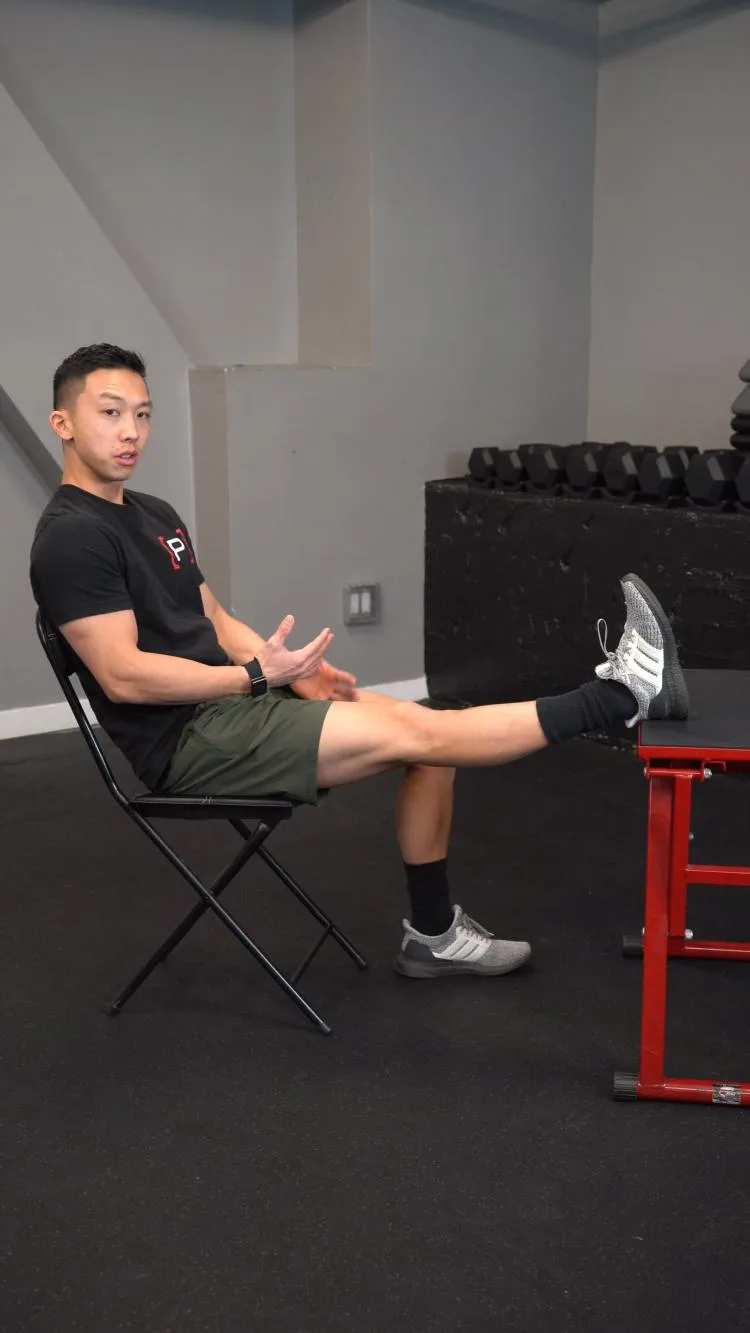
Seated Knee Extension - PROM
View exercise instructions
- HOW: Get into a comfortable position on a chair or bed with your foot elevated and supported on a surface so that your leg is straight and parallel to the ground. Let gravity pull your knee into extension and/or use your hands as needed to help move your knee into extension. Hold until your knee begins to feel a little uncomfortable – not painful. Then relax your leg. Repeat as needed or prescribed.
- FEEL: This should feel like a stretch behind your knee, maybe even your calf and hamstring. It can be normal sometimes to feel discomfort in the front of the knee, try to readjust your position if it is not tolerable discomfort. See video for other tips.
- COMPENSATION: Do not let your foot rotate out to the side. Make sure to only prop your foot on the chair so there is an empty space under your knee.
Exercise 02 of 06
Exercise demonstration
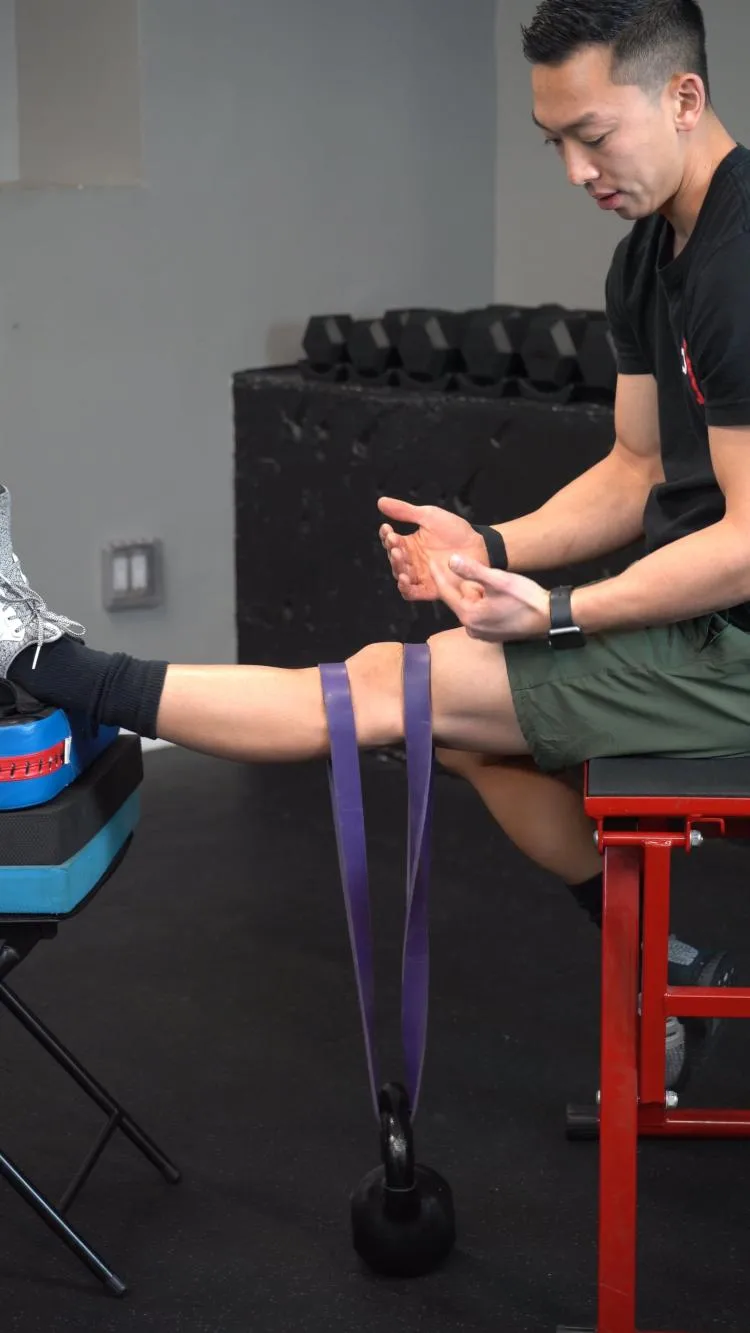
Seated Knee Extension Bag Hang - PROM
View exercise instructions
- HOW: Get into a comfortable position on a chair or bed with your foot elevated and supported on a surface so that your leg is straight and parallel to the ground. Place your foot into bag handles and place one handle above and below your knee. Place an item (2-5 lb.) into the bag. Let the weight of the bag pull your knee into extension for the time prescribed.
- FEEL: This should feel like a stretch behind your knee, maybe even your calf and hamstring. It can be normal sometimes to feel discomfort in the front of the knee, try to readjust your position if it is not tolerable discomfort.
Active Knee Extension Exercises
It's extremely important to follow up any passive knee extension exercise with active knee exercise exercises to "lock in" that hopefully newly acquired knee extension range. While the standing terminal knee extension (TKE) is the classic go-to exercise for active knee extension, there are a plethora of other options as well. The key component to every single one of them is to fire your quadriceps muscle and squeeze it as hard as you can. Your goal should be to try to feel a stretch behind the knee. Think of standing tall with each repetition! Below you will find a plethora of our favorite active knee extension exercises, which are all a part of our Knee Extension Overhaul Prehab Program that is proven to restore your knee extension!
Exercise 03 of 06
Exercise demonstration
3 Way Terminal Knee Extension TKEs
Exercise 04 of 06
Exercise demonstration
Resisted Forward Sled Pushes to Drive Terminal Knee Extension

Exercise 05 of 06
Exercise demonstration
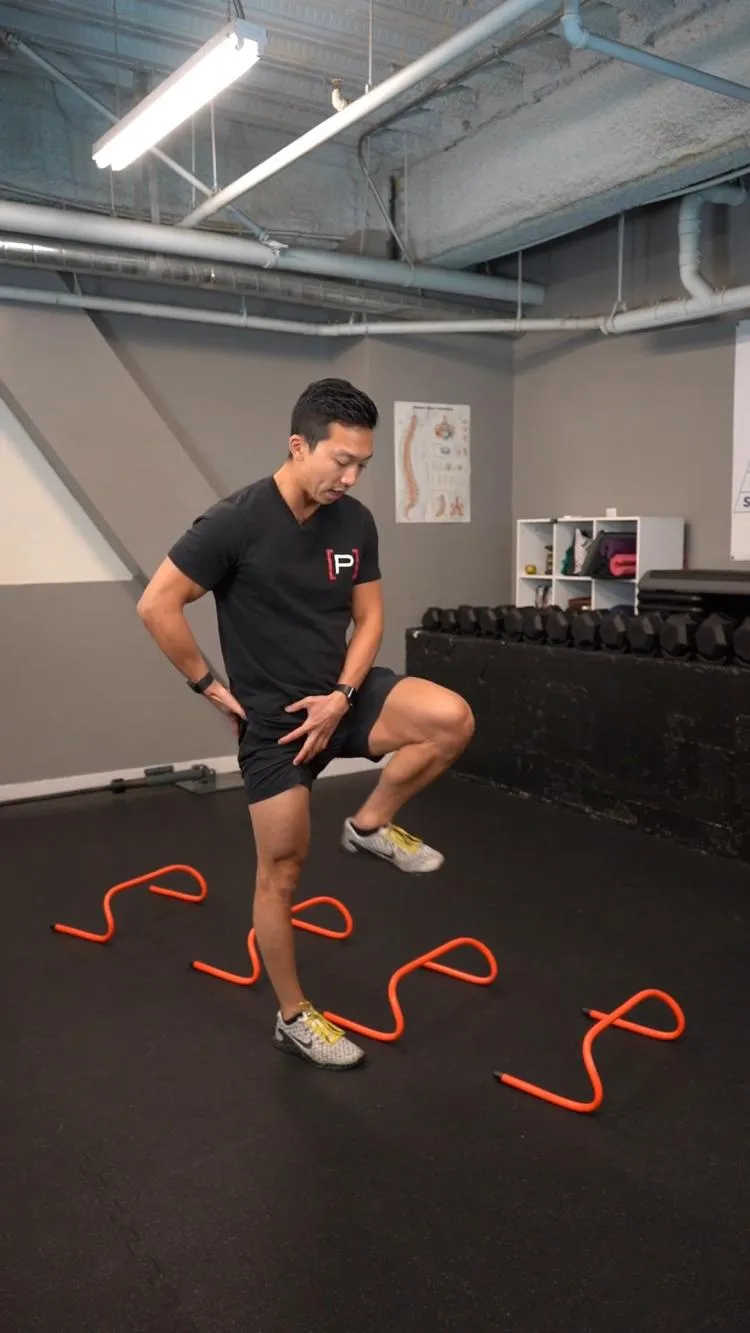
Backward Walking - Hurdle, Uninvolved Leg
View exercise instructions
- HOW: Using cones, lines, hurdles, or any other object, slowly step over each object with your uninvolved leg. As you take a step with your involved leg, work on “staying strong” and squeezing your glutes and quadriceps as you make contact with the ground. The goal is to feel strong on your leg like no one can push you over. Think about pushing your knee backwards and straight.
- FEEL: Feel your knee straighten and your quadriceps and glutes fire when your foot is on the ground.
- COMPENSATION: Do not let your knee buckle. Keep it squeeze as hard as you can when your weight is on your foot.
Exercise 06 of 06
Exercise demonstration
Quad Sets with AAROM Knee Extension

Gaining Terminal Knee Extension
Closing Thoughts
Having adequate knee extension is crucial for knee health and function. Moreover, if it is something that is not worked on early after surgery, it becomes very difficult to regain! There are a plethora of options in regards to exercises that are excellent for regaining knee extension, many of which we have exemplified in this article. Find what works best for you, and stick with it! Consistency is key. as you continue to have a better tolerance to these exercises, try to hold positions longer to have better carry over and ultimate improvements in range of motion!
Ensure You Gain The Knee Motion You Need!
Knee extension is not just a recommendation it is needed! Hypothetically, you could walk on a bent knee but this is going to waste energy and ultimately limit your movement endurance. Instead, let's get you moving efficiently by achieving and keeping full knee extension.
About The Author
Michael Lau, PT, DPT, CSCS
Prehab Co-Founder & Chief Product Officer
 Michael was born and raised in Northern California but now currently resides in Sunny SoCal ever since attending the University of California, Los Angeles as an undergraduate majoring in physiology. After his undergraduate studies, he received his Doctorate in Physical Therapy from cross-town rival the University of Southern California. As a licensed physical therapist with a strong background in strength and conditioning, Michael likes to blend the realms of strength training and rehabilitation to provide prehab, or preventative rehabilitation, to his patients. A common human behavior is to address problems after they become an issue and far often too late, which is a reactionary approach. He believes the key to improved health care is education and awareness. This proactive approach-prehab-can reduce the risk of injuries and pain in the first place. He is a huge proponent of movement education and pain science. Clinically, he has a special interest in ACLR rehab and return to sport for the lower extremity athlete.