

On this page 7 sections
Your guide
What you'll learn
So you fell on your hand and it swelled up like a balloon. You find out you broke your wrist, experienced a wrist fracture, a FOOSH injury - you name it - it sucks no matter what. Next thing you know you're in a cast for 4-6 weeks. Time goes by, you see the doctor and he says the bone is healed, you're good to go! You get the cast removed, but you realize your wrist and hand look shriveled up and tiny compared to the other side. Even worse, it hurts to move it, your hand feels weak, you can't even put weight through it, now what?! In this article, we will detail exactly what a wrist fracture is and some exercises to jump-start your rehab when you get your cast off. Learn all about what to do after a wrist fracture!
What Is A Wrist Fracture?


A broken wrist also referred to as a wrist fracture, is typically a break in the distal radius bone, which is one of the bones in your forearm on the thumb side. Wrist fractures typically occur from falling due to the natural reaction to try and break the fall by reaching out and landing on the hand. As you can see above, the more common wrist fracture to occur from a FOOSH (Falling Onto An Outstretched Hand) injury is termed a Colle's Fracture. From the picture above, you can also see that Smith's Fracture also can occur which results in an inward motion of the wrist, but this is less common than the Colle's Fracture.

How Do I know If I Broke My Wrist? Should I Get An X-Ray?

Maybe you stumbled upon this article because you just hurt your wrist and you're trying to decide if you should seek medical attention or not. Well, you've come to the right place! This is a really good question, so good that researchers decided to figure out who should and who shouldn't get x-rays to save the health care system some money. This is considering the fact most people who present to the emergency room with wrist pain are referred to imaging, however, only 39% of people who experience wrist trauma will have sustained a fracture (1). The Amsterdam Wrist Rules concluded the following information...
The likelihood of having ANY type of wrist fracture is greater if...
- Age (every 10 years of life increases the likelihood)
- Male
- Swollen wrist
- Visible deformation
- Distal radius tender to palpation
- Pain with radial deviation
- It DOES NOT hurt to compress/jam the thumb
The likelihood of having a DISTAL RADIUS fracture is greater if...
- Age (every 10 years of life increases the likelihood)
- Swollen wrist
- Visible deformation
- Distal radius tender to palpation
- Pain with wrist flexion
- Pain with forearm supination
- NO PAIN with ulnar deviation
The bullet points in bold and italic held the most weight in regards to the likelihood of a wrist fracture. Thus if you have a very swollen wrist, a visible deformity of your wrist, and it is tender to touch on the inside of your wrist at the distal radius bone, it is likely in your best interest to seek medical attention and get x-rays to confirm if you have a wrist fracture or not.
So I Broke My Wrist, Now What?
It sucks to be stuck in a cast for 4-6 weeks. However, that doesn't mean you have to be completely sedentary. Now we aren't saying you have to lift weights like Terrelle Pryor did when he had a cast on, but don't sit on your butt on the couch for a month! Technically you can still do cardio, lower body exercises, and even train your other arm. The common concerns are that you will be lop-sided and create asymmetries/imbalances if you only train your other arm. That is false! If anything training your other arm can lead to something called the crossover effect, helping to maintain the size and strength of your other arm!
So I Got My Cast Off, Now What?
 I remember in college I broke my ring finger playing flag football. I had a cast on for 6 weeks, it was the most glorious day getting that thing off. However, when the cast finally came off I was mortified by how my hand, wrist, and forearm looked. Even worse, I tried to move my hand and fingers and nothing was happening! It was SO STIFF. However, I knew what I had to do and that was simply getting my wrist and fingers moving again and using my hand as much as I could!
Have You Recently Suffered A Wrist Injury?

The wrist is a commonly injured area, especially if you are involved in sports or manual labor. If you are dealing with wrist pain or just suffered a fracture, we have the perfect program for you!
Grip And Range Of Motion Exercises
With your average non-complicated wrist fracture, gentle introduction to gripping and range of motion exercises in every direction is exactly what your wrist wants and needs. Below you will find multiple videos to help get your wrist and hand moving again!
Exercise 01 of 07
Exercise demonstration
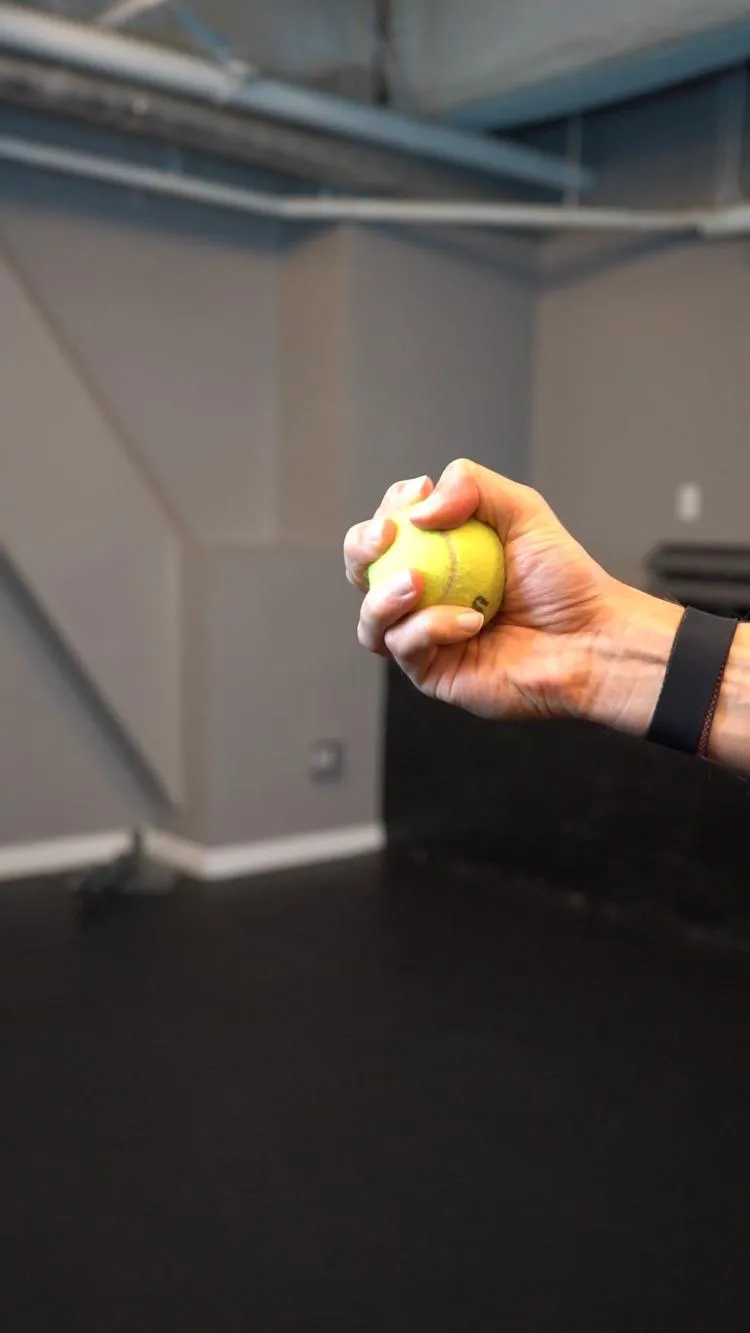
Tennis Ball Squeeze
View exercise instructions
- HOW: Hold a tennis ball in your hand, squeeze the tennis ball as hard as you can with your fingers and your thumb. Relax and repeat
- FEEL: You should feel your hand, wrist, and forearm muscles working. If you squeeze hard enough, you may also feel more muscles in your entire arm working.
- COMPENSATION: Maintain wrist position while performing this exercise.
Exercises to Perform Following a Wrist Sprain
Exercise 02 of 07
Exercise demonstration
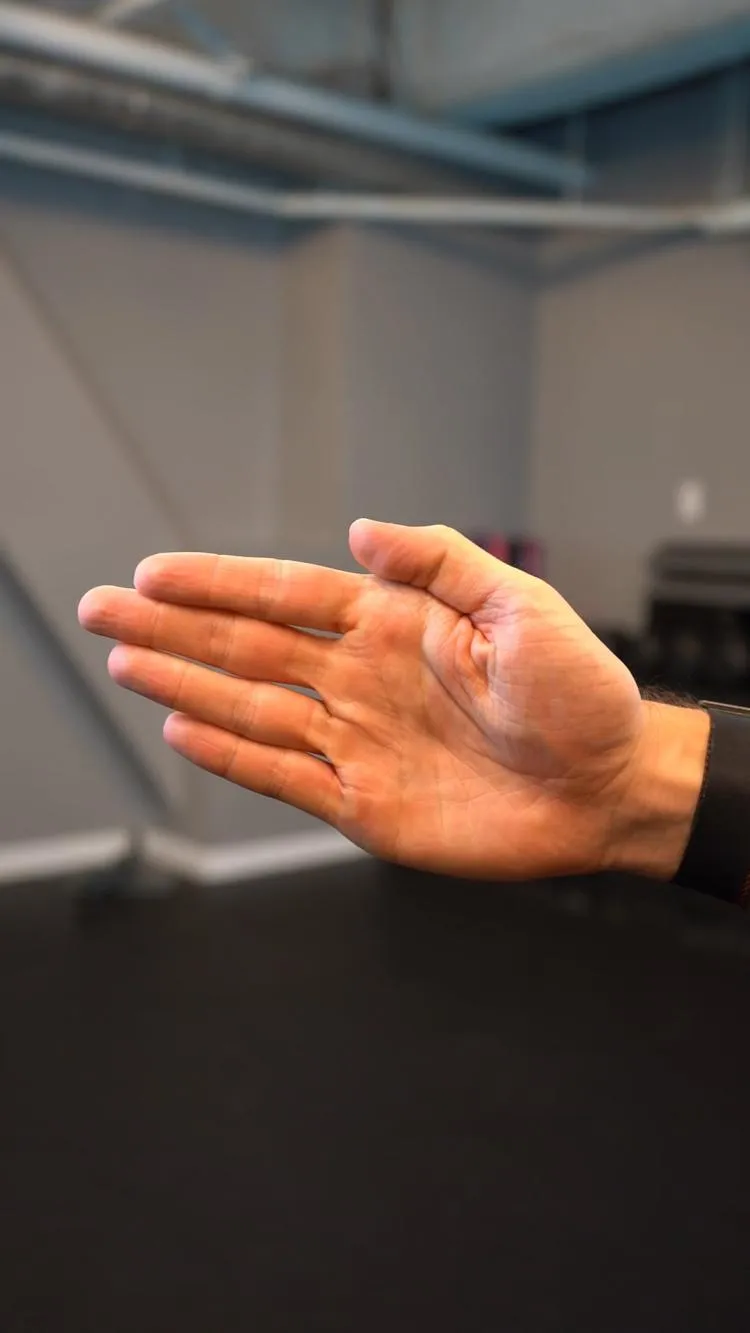
Hand Tendon Glide
View exercise instructions
- HOW: Follow the video to watch how to specifically perform the exercise. Start with your wrist in a neutral position with your fingers together and straight. Start by bending just your finger tips down to the base of your fingers, followed by making a fist, followed by straightening your fingers while maintaining a fist, followed by bringing your finger tips down to the base of your hand. Repeat
- FEEL: You will feel your hand and finger muscles working as well as potentially a stretch in your hand and fingers.
- COMPENSATION: Take your time and follow the video in it's order.
Exercise 03 of 07
Exercise demonstration
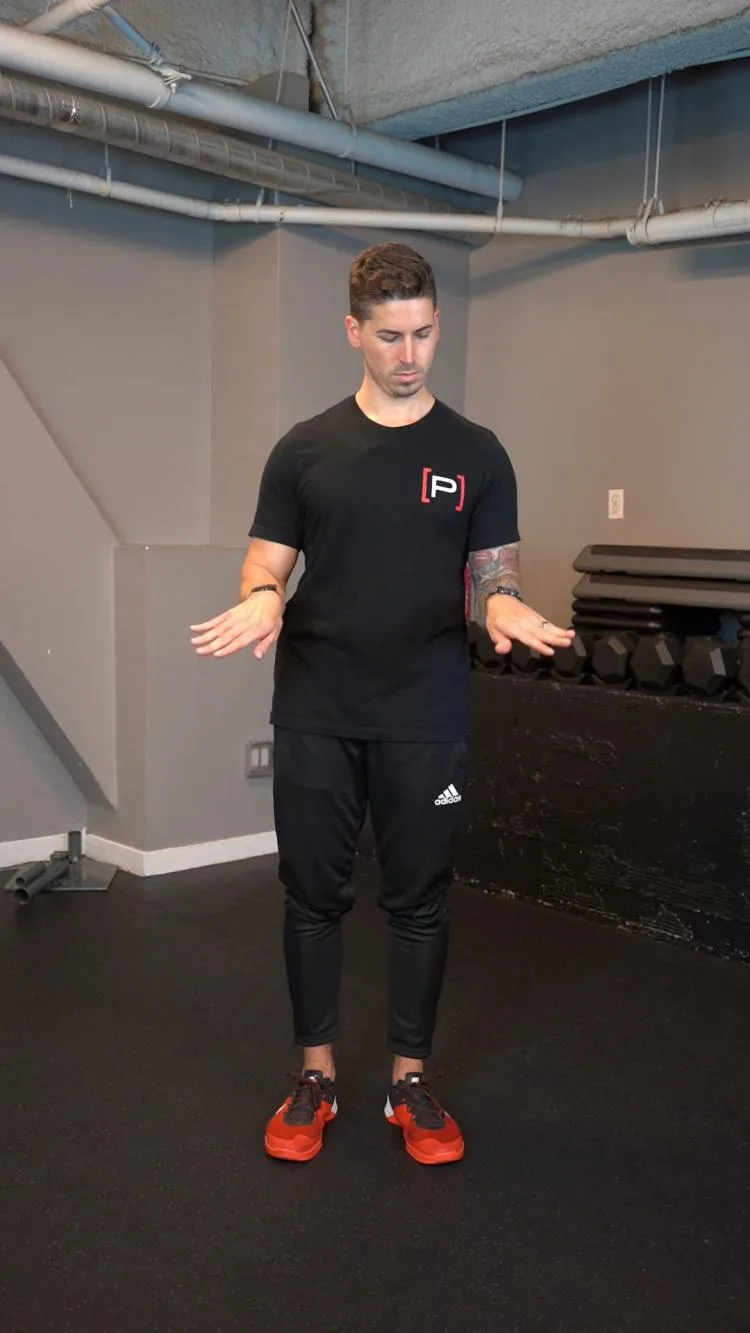
Wrist And Finger Circles - AROM
View exercise instructions
- HOW: While keeping your arms and forearms still, draw big circles with your wrist and fingers moving clockwise and counter-clockwise.
- FEEL: You should feel your wrist, hand, and forearm muscles working to control the movement. You may feel a stretch in your wrist, hand, and forearms as well.
- COMPENSATION: Try to focus on controlling wrist movement with an emphasis on moving through your full ROM slowly. Do not create excessive movement from your forearms or shoulders.
Exercise 04 of 07
Exercise demonstration
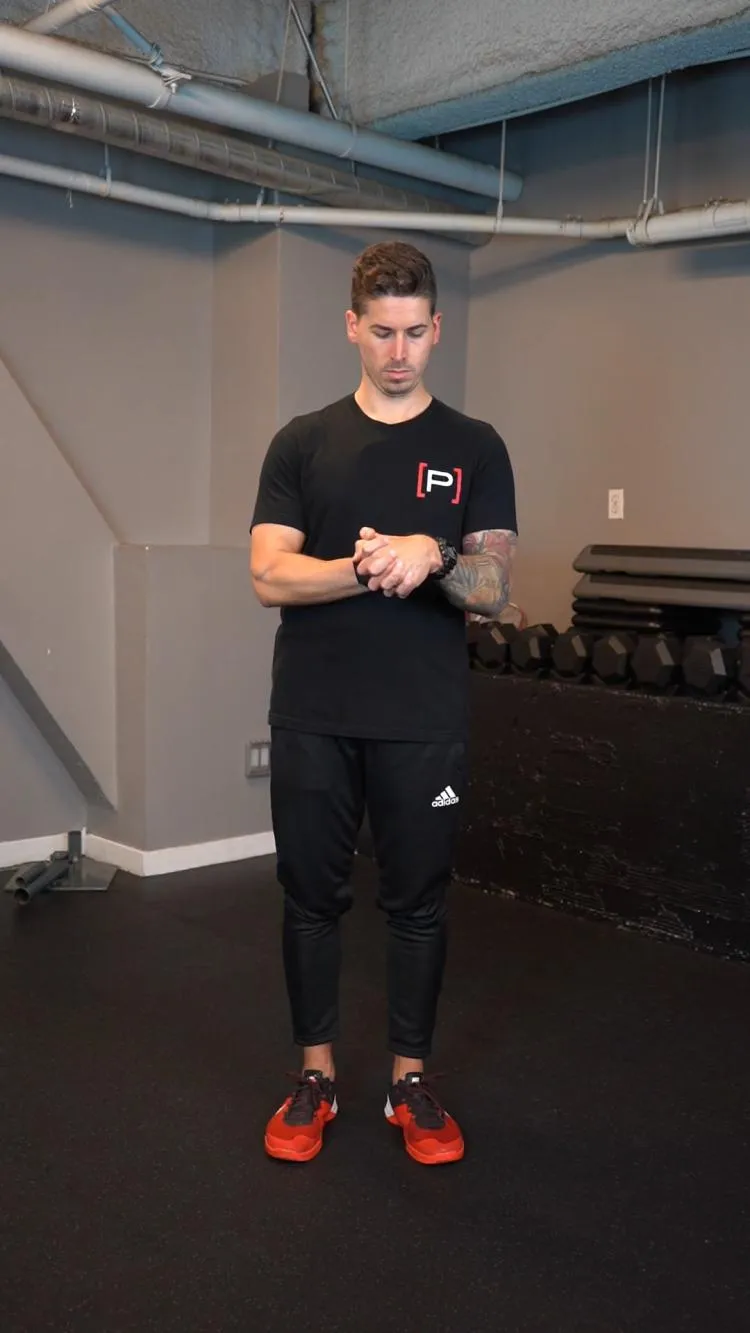
Wrist And Hand Circle - AROM, Hands Together
View exercise instructions
- HOW: Interlock your hands and fingers following by drawing big circles clockwise and counter-clockwise with your knuckles.
- FEEL: You should feel your wrist, hand, and forearm muscles working to control the movement. You may feel a stretch in your wrist, hand, and forearms as well.
- COMPENSATION: Try to focus on controlling wrist movement with an emphasis on moving through your full ROM slowly. Do not create excessive movement from your forearms or shoulders.
Exercise 05 of 07
Exercise demonstration
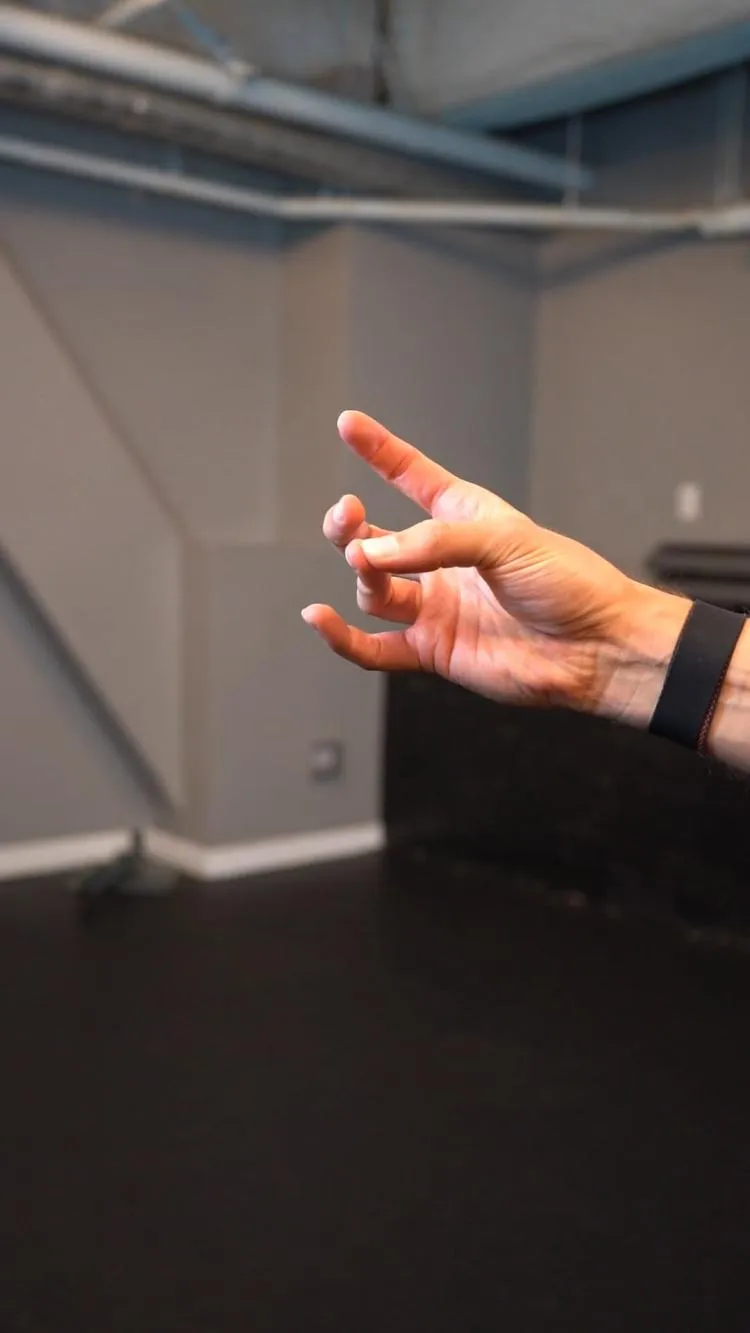
Thumb To Fingertip Tap - AROM
View exercise instructions
- HOW: Start with your wrist in a neutral position and your fingers spread apart. Then move your thumb towards a fingertip, return to starting position, and repeat on the next finger. You can start from the pinky side or index finger side.
- FEEL: You will feel your thumb and hand muscles working.
- COMPENSATION: Try to focus on controlling thumb movement and accuracy with the fingertip taps.
Exercise 06 of 07
Exercise demonstration
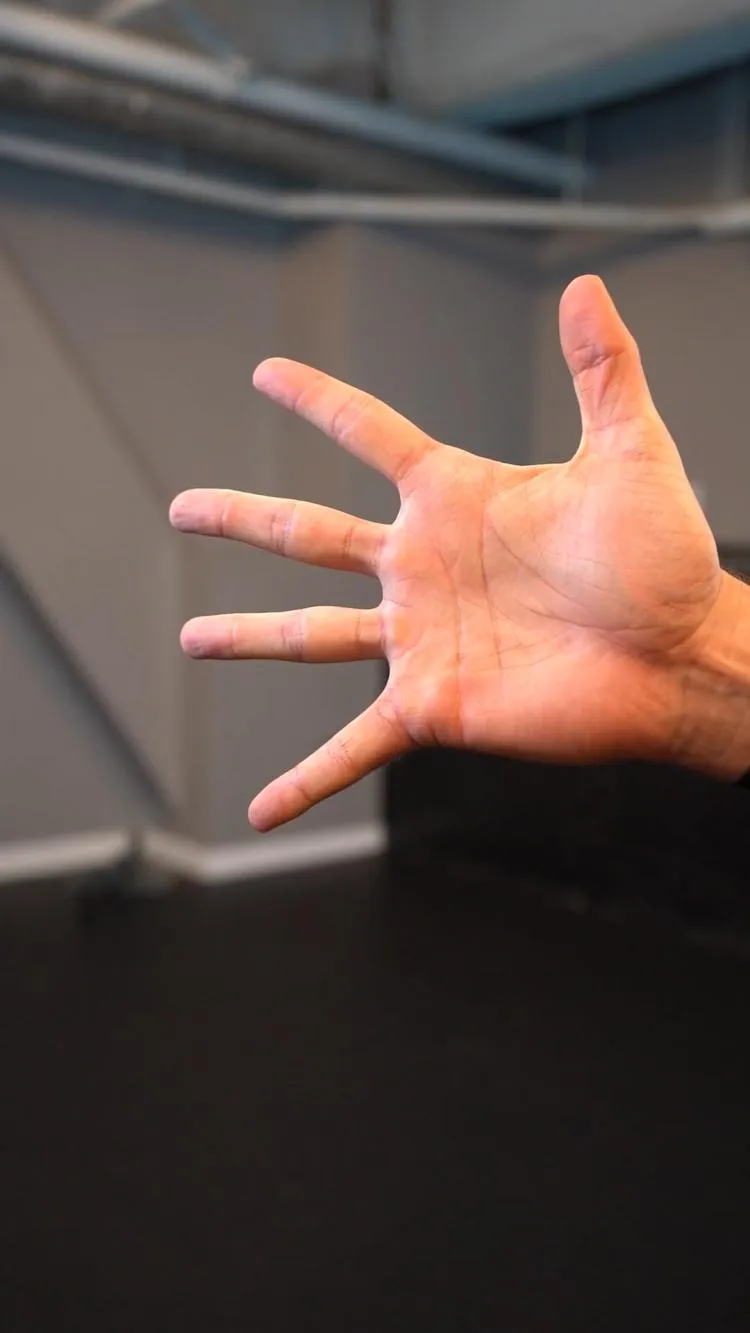
Finger Abduction and Adduction - AROM
View exercise instructions
- HOW: Start with your wrist in a neutral position and your fingers and thumb together with them straight. Now spread your fingers and thumb as far as you can from one another, hold for a moment, then return to starting position and repeat.
- FEEL: You will feel your finger and hand muscles working.
- COMPENSATION: Try to focus on controlling finger and thumb movement with an emphasis on fine control and accuracy.
Exercise 07 of 07
Exercise demonstration
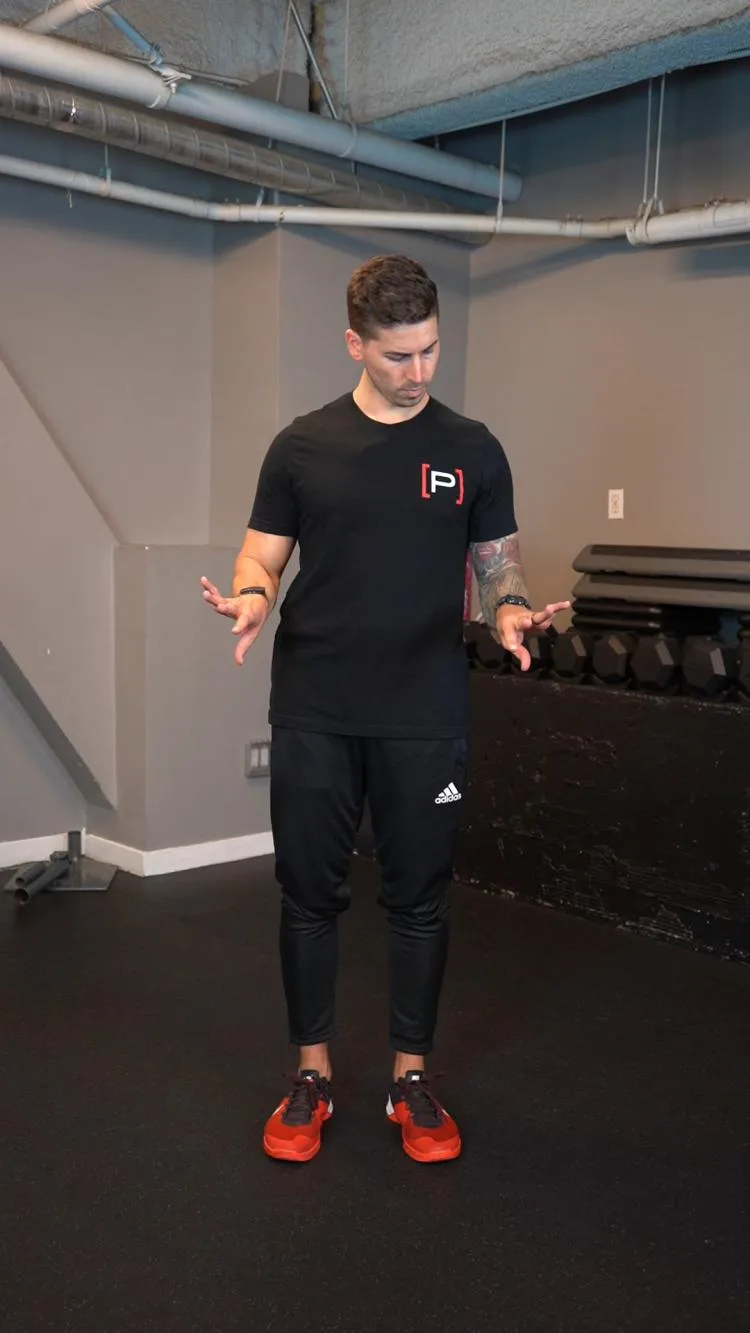
Elbow Pronation And Supination - AROM, Elbows Bent
View exercise instructions
- HOW: Standing with your elbows bent and arms by your sides, rotate your forearms and palms fully in and fully out to perform full pronation and supination AROM. You should be changing between your palms facing up and your palms facing down
- FEEL: You may feel a stretch in your forearms and wrist with your forearms doing most of the work.
- COMPENSATION: Make sure you're rotating your forearms and wrists, not getting motion from moving your arms. Keep your arms by your sides
LISTEN: SHOULD YOU ICE AFTER AN INJURY?

Closing Thoughts
Wrist fractures are unfortunately a slow recovery. It can take a really long time, even up to a year, for your wrist to feel back to 100% normal as it did prior to the injury. This is especially true in regards to grip strength, being able to support all of your weight through that wrist and hand, and doing everyday activities using your wrist and hand. The bottom line is you have to be patient and remind yourself of how far you've come compared to day 1 of having your cast on. If you continue to have significant limitations and pain with your wrist, it may be in your best interest to seek help from a physical therapist or certified wrist and hand specialist.
Take Control of Your Lower Arm Health!
The function of the elbow, wrist, and hand is not truly appreciated until discomfort comes along and limits its use. The shoulder girdle helps initiate movement of the arm but the lower part of the arm is the finisher! The lower arm gives us access to fine motor control and we cannot forget about the aspect that makes us human: opposable thumbs. Your brain perceives the hand to be so important that it dedicates a large chunk of the sensory area specifically to the hand. We are following the brain's lead here and dedicating a program to regaining full lower arm function!
References
- Walenkamp MM, Bentohami A, Slaar A, Beerekamp MS, Maas M, Jager LC, et al. The Amsterdam wrist rules: the multicenter prospective derivation and external validation of a clinical decision rule for the use of radiography in acute wrist trauma. BMC Musculoskelet Disord 2015;16:389–97.
About The Author
Craig Lindell, PT, DPT, CSCS
Prehab Co-Founder & Chief Content Officer
 Craig is a South Jersey native & Penn State Kinesiology Alumni. When the opportunity came, Craig packed his bags and drove to California to pursue his Doctorate in Physical Therapy from the University of Southern California. With Prehab, Craig oversees all digital content creation and multi-channel publication that reaches millions of people on a weekly basis. As a PT, Craig has a wide array of experience from working with various neurological conditions to working with collegiate & professional athletes across the Big Five in North American sports. Experiencing physical therapy first-hand as a soccer player in high school, Craig has a passion & special interest in adolescent athletic development working with young athletes to overcome injuries. In his spare time, Craig enjoys exercising, playing golfing, hiking, traveling, watching Philly sports, and spending quality time with his family.