

On this page 5 sections
Your guide
What you'll learn
Let me paint two pictures for you…you’re a new mom. You’re welcoming a new family member into your home and your life, you’re 6 weeks postpartum and have been cleared back to “normal activity” but your body feels less than prepared, you’re still experiencing difficulty with bowel movements and your pelvis feels heavy and tired at the end of the day.
Second picture…you’re a mom with 3 kids, your oldest is 12 and just started middle school band and basketball, your youngest is 5 and just starting kindergarten and your 9 year old has started soccer on the weekends. To say you’re busy is an understatement, but you’re hoping to prioritize your health and want to address the bit of leakage you’ve been experiencing with reintroduction of running to your workout routine.
For many these scenarios may sound familiar, for some this may be your current reality. In the small window of time during the day that you, as a mom, may get to exercise, how do you know what program to participate in, what exercises should be prioritized, and why are you spending time doing a particular exercise? Great questions. The truth is, there’s a lot of really great information out there. There’s also some not so great information out there. So, I’ll make it easy on you! This blog is designed to review what the pelvic floor is, what exercises are appropriate if you’re unsure where to begin, and provide you with 3 pelvic floor exercises that every mom should do.
Do you think you can fit 3 exercises into your day? Yes? We think so, too!
What is the Pelvic Floor?
The pelvic floor is a group of muscles that sit within the pelvis to provide support to the organs of urination, defecation, and sexual function. Additionally, these muscles provide dynamic stability to the hips, the spine, and the pelvis (1).

The diaphragm works in sync with the pelvic floor to control intraabdominal pressure. When we breathe in and our diaphragm descends, the pelvic floor should also naturally descend. When we breathe out and our diaphragm ascends, so should our pelvic floor (3). If it sounds like our pelvic floor works for us all the time, it’s because it does. Brush up on your pelvic floor knowledge in the blog below!
Exercise and the Pelvic Floor
During pregnancy and labor and delivery, the pelvic floor can be put under a lot of strain. The body is more than prepared to take on this load, but just like any muscle put under a large demand, it needs appropriate time to heal and recover. After delivery, the pelvic floor can feel painful, feel heavy, or feel unstable. It can be challenging to know what exercises are safe to perform to get moms back to their preferred activities while also respecting the healing of the pelvic floor muscles.
LISTEN: IS IT SAFE TO EXERCISE DURING PREGNANCY?

Before starting any exercise program postpartum, make sure to get clearance from your OBGYN at your 6-week postpartum appointment if acutely postpartum. As a general rule of thumb, if you begin to exercise and experience urinary or fecal incontinence, musculoskeletal or pelvic pain, heaviness or dragging sensations of the pelvic floor, or bleeding unrelated to your cycle, please seek out medical guidance from a professional (4).

This is your public service announcement reminding you that the just mentioned signs and symptoms of pelvic floor dysfunction are not only identified in our postpartum moms but moms across many age ranges! Never hesitate to seek advice and guidance when it comes to managing your pelvic health, many of these symptoms can be common but do not have to be your new normal. Check out our Postpartum Rehab program through the app if you are looking to take the guesswork out of your postpartum journey!
LEARN MORE ABOUT OUR POSTPARTUM REHAB PROGRAM
Our 8-week Postpartum Rehab program is designed to improve your confidence in your pelvic floor, hips, core, and provides you with the necessary education along the way! Please be sure that you have been cleared to begin activity by your OB-GYN prior to beginning our programming
READ: PELVIC ORGAN PROLAPSE AND EXERCISE

So, let’s get to it already! Moms, do you want to support your pelvic floor through exercise and are curious about where to start? Try these three exercises below.
3 Exercises for YOU, Mom
Exercise 01 of 03
Exercise demonstration
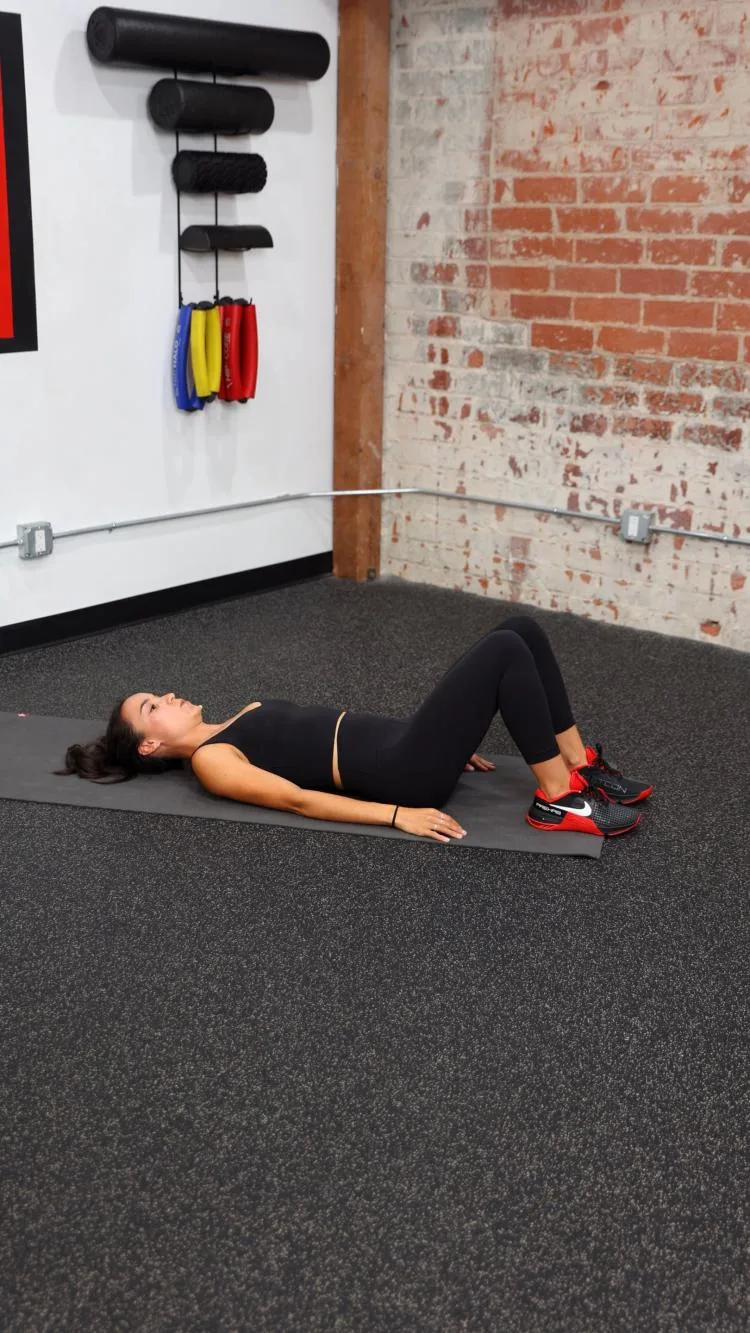
Bridge - Pelvic Floor Contraction
View exercise instructions
- HOW: Begin by lying on your back. As you breathe in, breathe into the belly and the area between the sits bones, letting the pelvic floor relax. Breathe out bringing the ribs down, contracting the pelvic floor as you lift the hips to the ceiling. Return to the starting position.
- FEEL: You will feel your glutes and hamstrings working. You will feel your core working.
- COMPENSATION: Avoid arching the back or flaring the ribs. Avoid shifting the hips side to side.
Reps and sets: 3x5
Notes: Make sure to keep your ribs down when performing this exercise. You should not be arching through your back! Due to the growing baby, the ribs during pregnancy will flare and we want to work on controlling this rib flare postpartum. Remember to exhale during the entire exercise while actively working to contract your pelvic floor. When you return to the starting position, breathe in through your belly and relax the pelvic floor. Then go again!
Exercise 02 of 03
Exercise demonstration
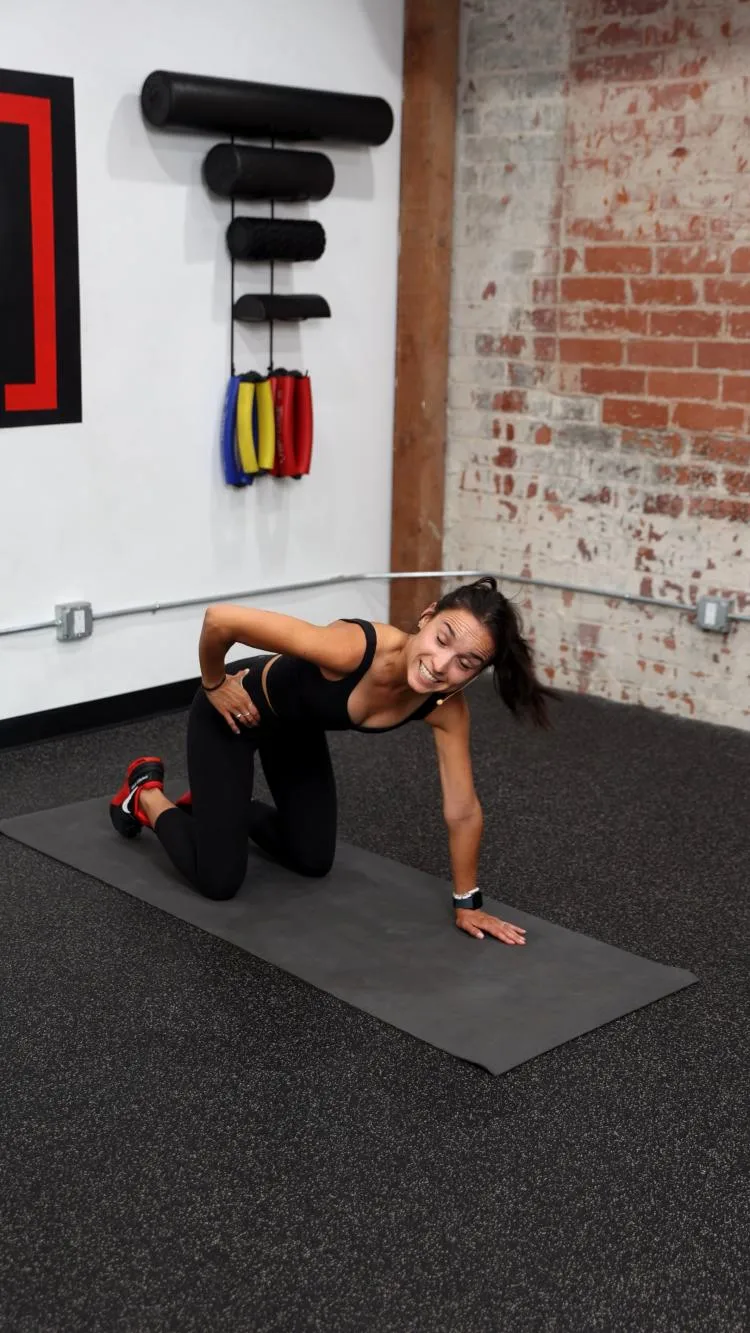
Bird Dog - Pelvic Floor Contraction
View exercise instructions
- HOW: Begin by positioning on hands and knees. As you breathe in, breathe into the belly and the area between the sits bones, letting the pelvic floor relax. Breathe out bringing the ribs down, contracting the pelvic floor as you lengthen the arm and opposite leg away from you. Return to the starting position.
- FEEL: You will feel your core, glutes, and shoulder blades working.
- COMPENSATION: Avoid arching the back. Avoid shifting or rotating the hips.
Reps and sets: 3x6
Notes: Keep your ribs tucked and your back from arching. If asked to balance your favorite coffee on your back, it wouldn’t fall off. Consider contracting your pelvic floor during the movement of the bird dog and then relaxing your pelvic floor once you’ve returned to quadruped. Make sure to breathe through your diaphragm!
Bird dog is an amazing exercise to challenge the pelvic floor muscles. There have been numerous studies that have demonstrated that the bird dog exercise alone has been able to recruit the pelvic floor muscles in a very similar manner as an isolated pelvic floor contraction (2). If you’re having a hard time recruiting the pelvic floor muscles, make sure to add some bird dogs into your workout routine.
Exercise 03 of 03
Exercise demonstration
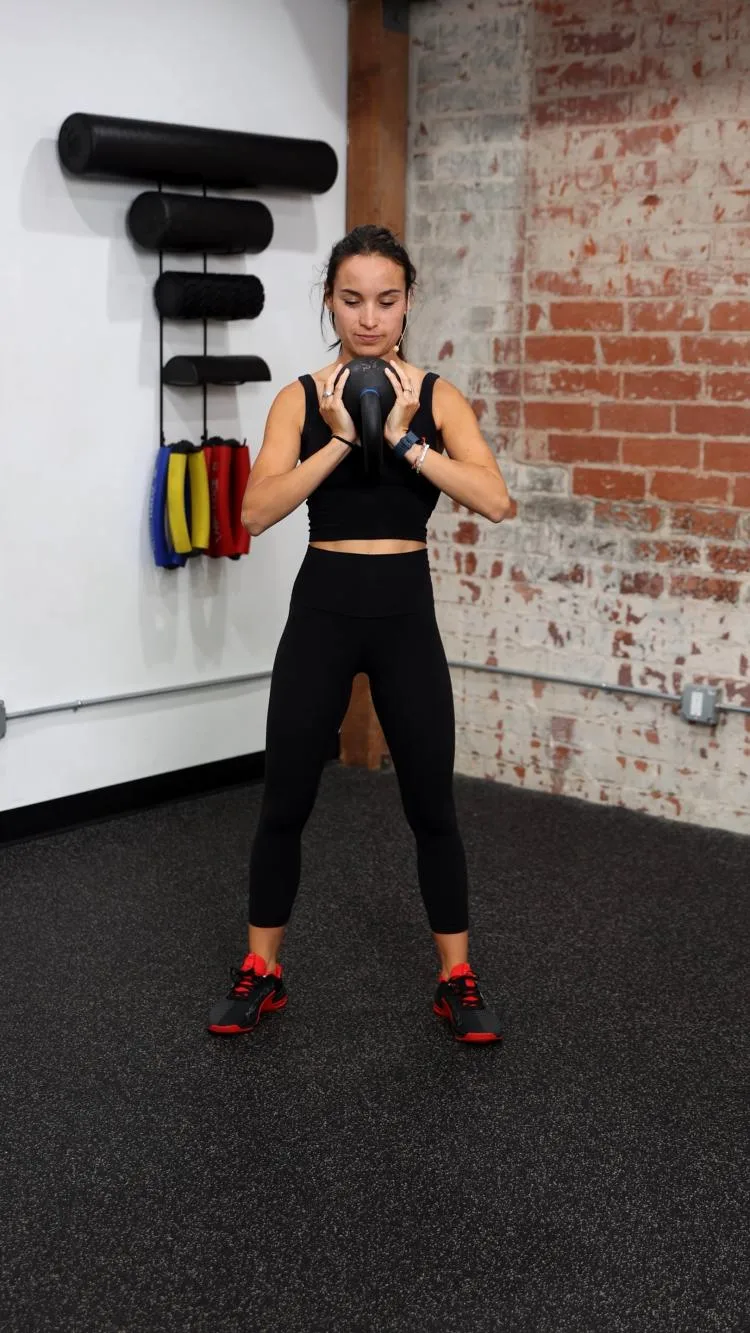
Goblet Squat - Pelvic Floor Contract & Relax
View exercise instructions
- HOW: Begin in a standing position holding a weight comfortably at your chest. As you breathe in, breathe into the belly and the area between the sits bones, letting the pelvic floor relax. Lower your body towards the ground. Drive your knees out during the descent. Breathe out bringing the ribs down, contracting the pelvic floor as you stand back up. Use your glutes to come back up.
- FEEL: You will feel the core, glutes, and quadriceps working.
- COMPENSATION: Avoid arching your back.
Reps: 3x5
Notes: This is an exercise that I feel strongly all moms should be practicing! Why? Whether it’s a newborn, a toddler, a toolbox, a backpack, a kettlebell, or a grocery bag, at some point you will be bending over to pick something up. A squat is a much better alternative to lifting than bending over and overusing your back. Remember to breathe in on the lowering motion and breathe out and perform a pelvic floor contraction with exertion. Your pelvic floor and lower back will thank you!
If dealing with lower back discomfort, be sure to check out some of our low back content through our platforms! Start with the video below!
Closing Thoughts
The pelvic floor plays an integral role in managing changes in intra-abdominal pressure, providing stability to the hips and spine, and supporting the organs of urination, defecation, and sexual function. Pregnancy and labor and delivery can challenge the muscles of the pelvic floor and the content and resources available to moms as to when to start exercising and how to exercise can feel overwhelming.
No matter where you are within your postpartum journey, from 6 weeks to 6 years, know that you can strengthen your pelvic floor! If you are a new mom, remember to get clearance to exercise at your 6-week postpartum appointment before jumping (literally) into activities or exercise programs that might feel too intense. If you are experiencing any signs and symptoms of pelvic floor dysfunction, please reach out to a medical provider. A pelvic floor physical therapist or our Postpartum Rehab program are great places to start!
READ: PHYSICAL THERAPY AND PELVIC FLOOR EXERCISES

In the meantime, moms, give these three exercises a try! We know time is of the essence, and together these exercises reinforce pelvic floor strengthening, core strengthening, glute and hamstring strengthening, and preferred biomechanics with lifting.
If you’ve got five minutes, we’ve got three exercises that all moms should do. Let’s go!
Resources
About The Author
Lyndsay Centrowitz, PT, DPT
[P]rehab Writer & Content Creator

Dr. Lyndsay Centrowitz graduated from Colorado State University with a BS in Health and Exercise Science and a concentration in Sports Medicine. After multiple personal sports-related injuries and discovering a passion for healing through movement, Lyndsay attended Creighton University to receive her Doctorate of Physical Therapy. An avid runner herself, she has a particular interest in working with high school, recreational, and elite endurance athletes and has undergone specialty training in pelvic floor rehabilitation, postpartum care, and management of the female athlete to better serve her clientele. Through this specialty training, she has acquired a Certificate of Achievement in Pelvic Health Physical Therapy through the American Physical Therapy Association. Lyndsay now owns her own practice StrongHER in Park City, UT where she specializes in female athletics and care of pregnant and postpartum individuals. Additionally, Lyndsay is BSPTS C2 certified in scoliosis specific exercises and has found a niche working with adolescents with scoliosis to improve overall spinal health. No, you’re not seeing double! Lyndsay is an identical twin to Lauren Lynass, one of our [P]rehab rockstars. A native of Colorado, Lyndsay is an adventure seeker who loves to hike, camp, and race her twin sister on the mountain trails. When she isn't exploring Park City's outdoor playground, you can find her curled up with a cup of tea and a good book. Follow along @strongher_dpt on Instagram!